
Pampanella
Molisan pork with garlic and red pepper
Pork slowly bakes beneath a vivid red coating of sweet and hot pepper, garlic and vinegar, leaving tender meat and savory juices.
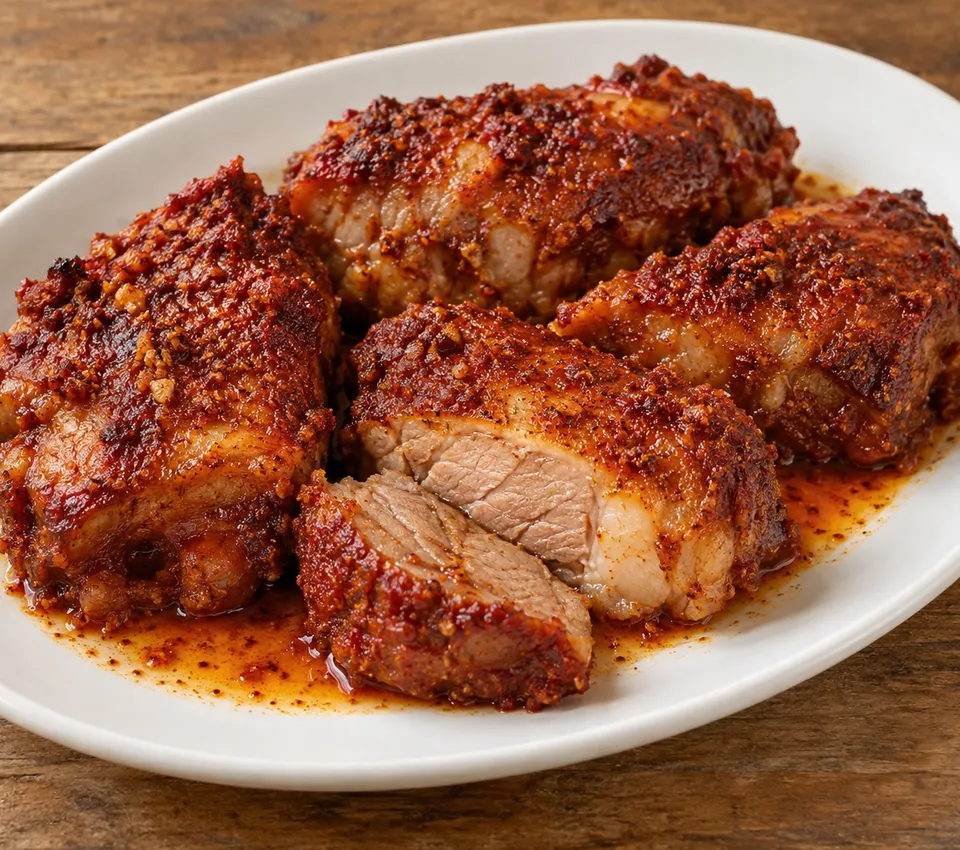 Slow-baked pork, red pepper & garlic
A red pepper coat,
tender Molisan pork.
Pampanella is a pork preparation closely associated with San Martino in Pensilis in Molise. Generous dried red pepper and garlic coat the meat, giving it an earthy sweetness and a heat that varies with the cook. Vinegar adds a sharp edge to the roasting juices.
Local makers use different pork cuts and oven methods. This home recipe uses boneless shoulder, with some fat left between the muscles, and a covered domestic-oven bake to keep the pepper coating from scorching. It is served as a meat course here; elsewhere, slices may also find their way into bread.
Explore by food: Meat
Let’s make pampanella.
Four generous meat-course portions, using a covered domestic-oven method and boneless pork shoulder. Begin the six-hour refrigerated seasoning well ahead.
Four portions from 1 kg boneless pork shoulder, without side dishes.
What you’ll need
- 1 kgboneless pork shoulder, skin removed, some fat retained, cut into 2.5 cm-thick pieces
- 40 gsweet unsmoked paprika or ground dried sweet red pepper
- 5 ghot ground chili
- 4garlic cloves, finely minced
- 10 gfine salt
- 80 mlwhite wine vinegar, divided
- 120 mlwater, plus a little more only if the pan dries
The 370-minute rest allowance includes six hours of refrigerated seasoning and ten minutes after roasting. Cooking includes oven heating and the slow bake; thick or tightly packed shoulder pieces may need longer. This measured domestic-oven version differs from large local production batches. Bread and side dishes are separate.
How to make it
- 01
Season the pork
Mix the sweet paprika, hot chili, garlic, salt and 40 ml vinegar into a thick coating. Rub it over all sides of the pork. Place in a shallow nonreactive dish, cover and refrigerate for 6 hours; do not marinate at room temperature.
- 02
Prepare the oven
Heat the oven to 170°C / 340°F. Put the pork in a snug roasting dish in one slightly overlapping layer. Pour 120 ml water around the edges without washing the spice coating away. Cover tightly with baking parchment beneath foil, keeping the foil away from the acidic food.
- 03
Bake gently
Bake covered for about 2¼–2½ hours. Carefully lift the cover away from your face to check after 90 minutes; add a small splash of water if the base is drying. The pork should become tender enough to yield easily to a fork. A thermometer must read at least 63°C / 145°F in the thickest piece; shoulder will usually reach a higher temperature before it becomes tender.
- 04
Add the vinegar finish
Remove the cover and spoon the remaining 40 ml vinegar over the meat. Bake for another 15–20 minutes, basting once with the pan juices. Keep the coating red-brown rather than black; cover loosely again if it darkens too fast.
- 05
Rest and serve
Rest for 10 minutes, then divide the pork and a little of its juices among four plates. Serve warm. If the shoulder still feels firm, allow extra covered cooking time until tender before the uncovered finish.
More to discover…
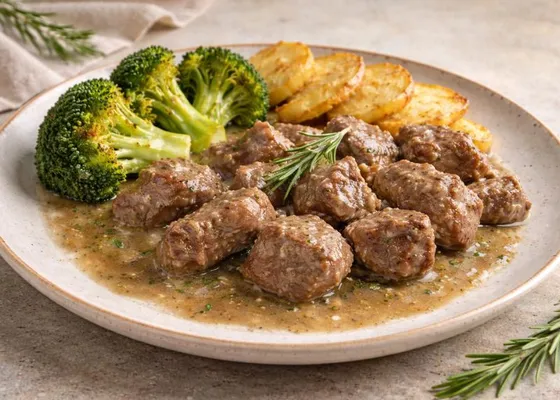 Secondi
Abbacchio alla Romana
Lamb braises with garlic, rosemary and white wine, then takes on a savory, lightly sharp sauce from anchovies and vinegar.
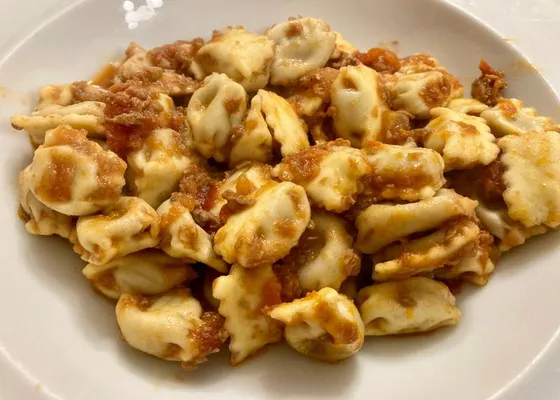 Primi
PrimiAgnolotti del Plin
Small pinched pasta parcels hold a fine filling of braised veal, pork and spinach, dressed simply with butter and sage.
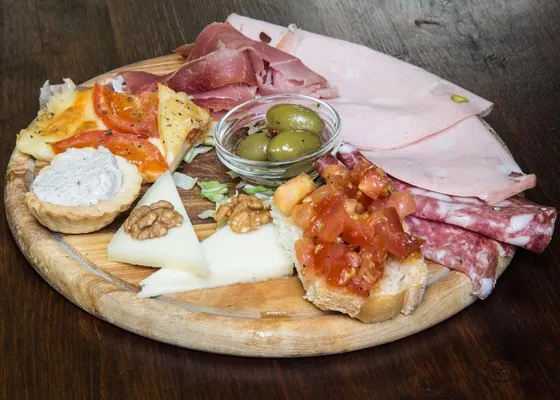 Antipasti
Antipasto Misto
Cured meats, cheeses, olives and preserved vegetables make a shared Italian starter, with bread for assembling small bites.