
Sfogliatella
Neapolitan layered pastry with ricotta & citrus
Crisp ridges of pastry surround a sweet ricotta-and-semolina filling scented with citrus, in the riccia version of the Neapolitan specialty.
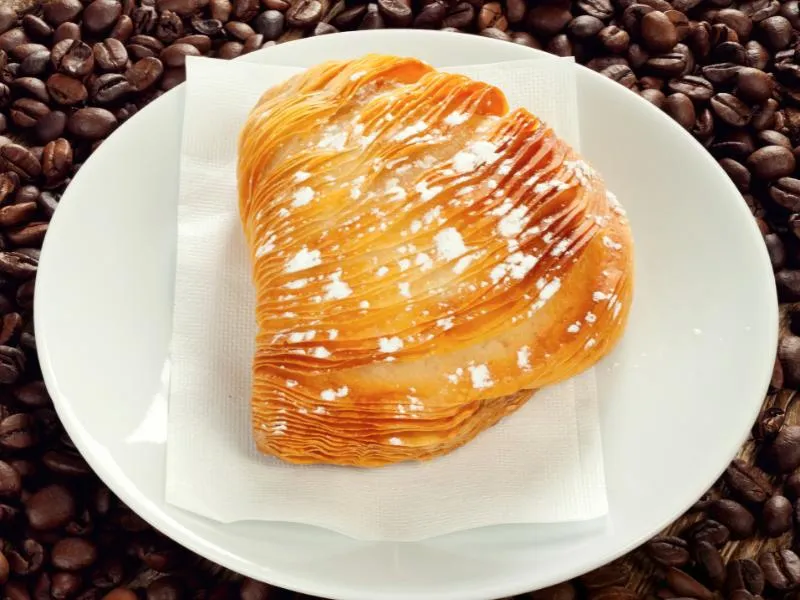 Sfogliatella riccia, with its crisp layered shell
A shell of crisp layers,
a Neapolitan pastry favorite.
Sfogliatella is a Campanian pastry with a sweet ricotta-and-semolina filling. The riccia version has a ridged shell built from many thin layers, while sfogliatella frolla has a smoother shortcrust exterior. Candied citrus and gentle spice flavor the filling.
In Naples, sfogliatelle are familiar with coffee at breakfast or as a sweet snack. The crisp shell is best appreciated while fresh, after the hot filling has cooled enough to eat. The home recipe makes the riccia version from its own stiff dough, stretched and rolled with lard. The thin layers need patient rolling and long rests before they can be shaped around the cold filling.
Explore by food: Desserts
Let’s make sfogliatelle ricce.
12 large pastries. Make the laminated shells and ricotta-semolina filling from scratch. A pasta roller, long clear work surface and kitchen scale are important; plan over two days.
12 large sfogliatelle ricce; one pastry per serving. Use a pasta roller and a long clear work surface.
What you’ll need
Shells
- 400 gstrong bread flour, plus 20 g for the rollers
- 160 mlwater, plus up to 10 ml only if needed
- 8 ghoney
- 4 gfine salt
- 160 gsoft lard, divided between layers and shaping
Filling
- 300 mlmilk
- 100 gfine semolina
- 120 gcaster sugar
- 1 pinchfine salt
- 250 gfirm ricotta, already drained
- 1 largeegg
- 50 gcandied orange peel, finely chopped
- ½ tspvanilla extract
- ¼ tspground cinnamon
- 1 tspfinely grated orange zest
Finish
- 15 gpowdered sugar, for dusting
The 735-minute rest allowance includes 1 hour dough hydration, 2 hours refrigeration, 30 minutes tempering, 30 minutes filling cooling, 8 hours overnight chilling and 15 minutes final cooling. Preparation includes extended rolling and shaping; cooking includes semolina and baking. Start with drained ricotta and allow extra time while learning the lamination. Lard is pork fat.
How to make it
- 01
Make the stiff dough
Dissolve salt and honey in 160 ml water. Work into 400 g flour by squeezing and pressing until no dry pockets remain, about 15–20 minutes. This is a stiff dough; add the extra water a teaspoon at a time only if loose flour will not join. Cover tightly and rest for 1 hour.
- 02
Smooth and rest again
Flatten portions enough to enter the widest pasta-roller setting. Pass each through several times, folding between passes until smoother. Join portions end to end with a 2 cm overlap, pressing firmly. Fold loosely, wrap tightly and refrigerate for 2 hours. Let it stand covered for 30 minutes until pliable again.
- 03
Roll, stretch and grease
Reserve 30 g lard for shaping and use the other 130 g over the sheets. Dust rollers very lightly with the extra flour only if needed. Feed dough through successively narrower roller settings to about 0.5 mm thick. Support the growing sheet loosely on a rolling pin, keeping it from sticking or folding onto itself. Brush off loose flour. Unroll a section at a time, smear evenly to the edges with lard and gently stretch it sideways until almost translucent. Keep the sheet roughly 24 cm wide.
- 04
Make the layered cylinder
Starting at one short end, roll the greased sheet into a very tight cylinder, continuing to grease, stretch and wind the next sections around it. Keep the ends aligned so the cylinder stays about 24 cm long. Join any torn section with a small overlap. Wrap and refrigerate while making the filling. Allow roughly an hour for rolling and winding; beginners may need longer.
- 05
Cook and cool the filling
Bring milk, caster sugar and a pinch of salt to a simmer. Whisk in semolina in a thin stream. Stir over low heat for 5–7 minutes until very thick and smooth. Spread in a shallow bowl and cool for 30 minutes. Beat in ricotta, egg, candied peel, vanilla, cinnamon and zest until smooth. Cover and refrigerate the filling and dough cylinder for 8 hours.
- 06
Shape the shells
Heat a conventional oven to 200°C/390°F. Line two trays with baking paper. Trim only the ragged ends of the cold cylinder, then cut into 12 equal discs, about 1.8–2 cm thick. Rub hands and both disc faces with some reserved lard. With the spiral facing you, press the center gently outward with your thumbs, rotating and sliding the layers apart into a hollow cone. Keep the outer rim thicker and avoid flattening the layers together.
- 07
Fill and bake
Divide cold filling among the shells, about 65–70 g each, leaving space at the rim. Bring the open edges together gently without crushing or tightly crimping them. Set seam-side down on the trays with space between pastries. Bake for 10 minutes, then reduce to 180°C/350°F and bake for 25–30 minutes more, swapping tray positions halfway through, until deeply golden and crisp. The filling center should reach 74°C/165°F.
- 08
Cool before eating
Cool on a rack for 15 minutes, then dust with powdered sugar and serve warm. Filling stays hot after the shell feels comfortable to touch.
More to discover…
 Secondi
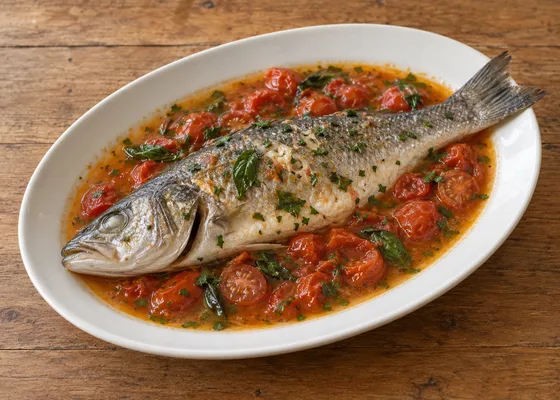
Acqua Pazza
White fish gently poaches with tomatoes, garlic and white wine, leaving a light broth to spoon up with bread.
 Secondi
Braciole Napoletane
Beef rolls filled with pecorino, parsley, pine nuts and raisins simmer slowly in tomato sauce until tender.
 Secondi
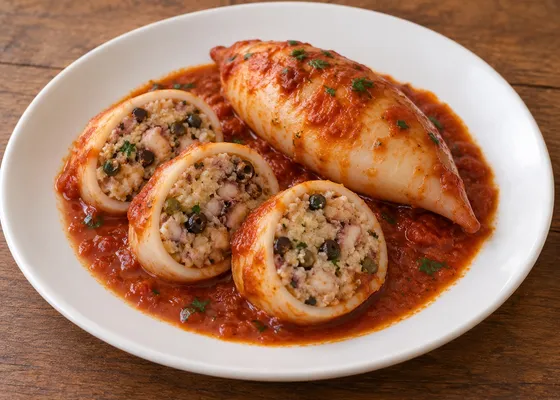
Calamari Ripieni
Squid tubes hold a savory bread-and-tentacle filling with olives and capers, then simmer gently in a light tomato sauce.