
Tagliatelle al
Ragù
Bolognese egg pasta with meat sauce
Fresh egg-pasta ribbons carry a slow-cooked beef and pancetta ragù, with a little tomato, milk and grated Parmigiano at the finish.
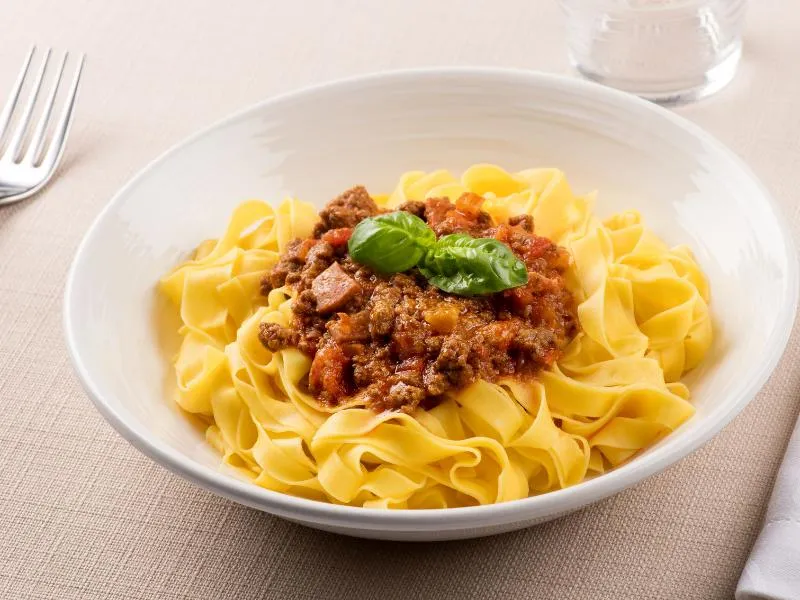 Egg-pasta ribbons, meat ragù & basil pictured
Egg pasta,
a slow Bolognese ragù.
Tagliatelle al ragù pairs fresh egg-pasta ribbons with the meat sauce associated with Bologna. Beef and pork cook with finely chopped vegetables, wine and tomato until the sauce is rich and cohesive. The broad ribbons carry it in a thin coating rather than a pool of tomato.
Recipes differ between households; this home version uses beef, fresh pancetta and a little milk during the simmer. It starts with purchased fresh tagliatelle, so no dough-making time is hidden. The basil in the photograph is a serving garnish; the recipe finishes with grated Parmigiano.
Let’s make tagliatelle al ragù.
Starts with purchased fresh egg tagliatelle and makes the ragù from scratch. Allow time for its long, gentle simmer.
Six first-course portions; begins with purchased fresh egg tagliatelle.
What you’ll need
Ragù
- 400 gcoarsely ground beef, about 15–20% fat
- 150 gfresh unsmoked pork pancetta, finely chopped
- 60 gonion, finely diced
- 60 gcarrot, finely diced
- 60 gcelery, finely diced
- 30 mlextra-virgin olive oil
- 150 mldry white wine
- 200 gtomato passata
- 1 tbspdouble-concentrated tomato paste
- 150 mlwhole milk
- 500 mllow-sodium beef broth, divided
- to tastefine salt and black pepper
Pasta and finish
- 600 gpurchased fresh egg tagliatelle
- 4 lwater, for the pasta
- 2 tspfine salt, for the pasta water
- 60 gParmigiano-Reggiano, finely grated, for serving
The cooking allowance includes browning, the full simmer and heating the pasta water afterward. Fresh pancetta here means uncured pork belly, rather than smoked bacon. The photograph’s basil garnish is not used in this selected ragù.
How to make it
- 01
Soften the pancetta and vegetables
Heat the oil and chopped pancetta in a heavy saucepan over medium-low heat for 5 minutes. Add onion, carrot and celery and cook for 10 minutes, stirring, until soft without darkening.
- 02
Brown the beef
Raise to medium heat, add the beef and break up with a spoon. Cook for about 10 minutes until its released moisture evaporates and the meat begins to sizzle.
- 03
Add wine and tomato
Pour in the wine and simmer for 4–5 minutes until mostly reduced. Stir in tomato paste and passata, then add 250 ml broth. Bring to a very gentle simmer.
- 04
Simmer slowly
Partially cover and cook gently for 2½ hours, stirring occasionally. At halfway, stir in the milk. Add the remaining broth a little at a time if needed to prevent sticking. Leave uncovered for the final 15 minutes so the ragù becomes thick and cohesive; season with salt and pepper.
- 05
Cook the fresh pasta
Once the ragù is ready, bring the 4 l water to a boil and add its salt. Separate the fresh ribbons and cook according to their packet timing, usually 2–4 minutes. Reserve 250 ml cooking water, then drain carefully.
- 06
Coat and serve
Put the ragù in a wide warm pan. Add the pasta and 60 ml reserved water, then toss gently over low heat until the ribbons are coated. Add more water only if needed to loosen. Divide among six plates and finish with grated Parmigiano.
More to discover…
 Primi
PrimiLasagna alla Bolognese
Thin pasta sheets alternate with slow-cooked meat ragù, béchamel and Parmigiano-Reggiano, baked until the edges turn golden.