Abbacchio alla Romana
Tender young lamb braised with rosemary, garlic, white wine, and anchovy-vinegar sauce.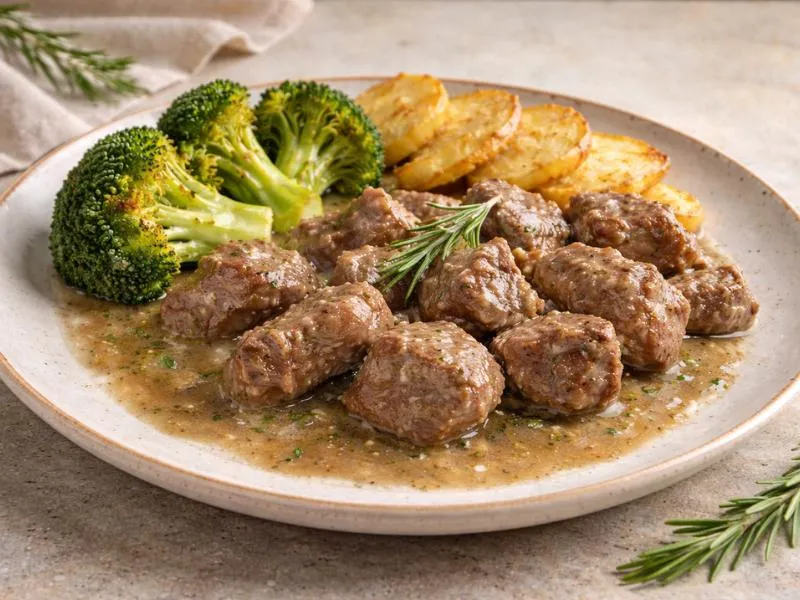
👉 View Authentic Recipe 👈
About This Dish
Abbacchio alla Romana, also known as Roman Lamb Stew, represents one of Rome’s most cherished culinary traditions, dating back centuries when young milk-fed lamb (abbacchio) was a prized specialty of the Lazio countryside.
The term “abbacchio” specifically refers to lamb under one month old that has been fed only mother’s milk, resulting in incredibly delicate, pale meat with a subtle flavor. This dish is traditionally prepared for Easter celebrations in Rome, though it appears on Roman tables throughout spring when young lamb is most abundant.
The preparation method showcases the Roman principle of using few ingredients to maximum effect. Unlike many stews that rely on aromatic vegetables like carrots and onions, abbacchio alla Romana builds its flavor profile entirely on the potent combination of fresh rosemary, garlic, anchovies, and white wine vinegar.
This distinctive sauce, sometimes called “la scotta” or “la scottadito” (finger burner), creates an intensely aromatic braising liquid that penetrates the meat during slow cooking.
The dish is sometimes called “abbacchio alla cacciatora” (hunter’s style), and while variations exist throughout Lazio—some including tomatoes or a cheese crust—the classic Roman version remains austere in its ingredient list but luxurious in its results. The authentic preparation produces fork-tender meat bathed in a concentrated, slightly acidic sauce that perfectly balances the richness of the lamb.
Our Recipe
This recipe honors the traditional Roman technique while adapting to widely available lamb shoulder, which requires slightly longer braising than milk-fed lamb but yields equally tender and flavorful results.
Ingredients
Serves 4
- 1¾ pounds lamb shoulder, trimmed and cut into 1½-inch pieces
- 3 tablespoons extra-virgin olive oil
- 3 cloves garlic (2 halved, 1 finely chopped)
- Salt and freshly ground black pepper
- 1 tablespoon all-purpose flour
- 3 tablespoons dry white wine
- 2 oil-packed anchovy fillets
- 2 tablespoons fresh rosemary leaves, finely chopped
- 2 tablespoons white wine vinegar
Instructions
-
Prepare the anchovy-rosemary paste: On a cutting board, combine the finely chopped garlic, rosemary leaves, and anchovy fillets. Use the side of your knife to mash and chop them together into a coarse paste, adding a small pinch of salt to help break down the anchovies. Transfer to a small bowl, add the vinegar, and stir until the paste dissolves into the liquid. Set aside.
-
Infuse the oil with garlic: Heat the olive oil in a Dutch oven or heavy-bottomed pot over medium heat. Add the two halved garlic cloves and cook until golden brown on both sides, about 2-3 minutes per side. Remove and discard the garlic—it has flavored the oil.
-
Brown the lamb: Increase heat to medium-high. Season the lamb pieces generously with salt and pepper. Working in batches if necessary to avoid crowding, add the lamb to the hot oil and brown on all sides, about 6-8 minutes total. The meat should develop a deep golden crust.
-
Thicken the base: Once all the lamb is browned, sprinkle the flour over the meat and stir well to coat evenly, ensuring no dry flour pockets remain. Cook for 1 minute, stirring constantly, to eliminate the raw flour taste.
-
Deglaze and add aromatics: Pour in the white wine and scrape the bottom of the pot with a wooden spoon to release any browned bits. Let the wine simmer until reduced by half, about 2 minutes. Add the anchovy-rosemary-vinegar mixture and stir to combine thoroughly.
-
Braise the lamb: Reduce heat to low, cover the pot with a tight-fitting lid, and simmer gently for 1 to 1½ hours, stirring occasionally. The lamb is ready when it’s fork-tender and the sauce has reduced to a thick, glossy consistency. If the liquid evaporates too quickly, add a few tablespoons of water or broth. The finished dish should have concentrated sauce coating the meat, not a soupy broth.
-
Rest and serve: Remove from heat and let rest for 5 minutes before serving. The lamb is traditionally accompanied by roasted potatoes or crusty Italian bread to soak up the intensely flavored sauce.
🧑🍳 Analyzed by CucinaBot
Why This Dish Works
The magic of abbacchio alla Romana lies in the interaction between acids and aromatics. The vinegar and wine create an acidic braising environment that tenderizes the lamb while preventing the meat from drying out during the long cooking process. Meanwhile, the anchovy fillets dissolve completely into the sauce, contributing glutamate-rich umami depth without any fishy taste—a classic Roman technique for building savory complexity.
The rosemary’s aromatic oils release slowly during braising, perfuming the meat and sauce with resinous, pine-like notes that complement lamb’s natural richness. The flour serves dual purposes: creating a light coating on the meat to hold the sauce and absorbing excess fat during cooking for a cleaner finish.
Key Success Factors
- Proper browning: Don’t rush the browning step—deep caramelization on the lamb’s surface creates the foundation of flavor through the Maillard reaction
- Gentle simmer: Keep the heat low enough that the liquid barely bubbles; aggressive boiling will toughen the meat rather than tenderize it
- Sauce consistency: The final dish should have just enough concentrated sauce to coat the meat—too much liquid dilutes the intense flavors
- Quality anchovies: Use high-quality oil-packed anchovies, not cheap paste; they should dissolve completely into the sauce without leaving any fishy notes
Common Pitfalls
Many modern versions add unnecessary ingredients like onions, carrots, tomatoes, or excessive herbs that muddy the dish’s clean, assertive flavor profile. The traditional recipe’s simplicity is intentional—the punchy combination of rosemary, garlic, anchovy, and vinegar should dominate without competition.
Another common mistake is using lamb that’s too lean; shoulder is ideal because its marbling keeps the meat moist during extended braising. Finally, some cooks add too much liquid and create a watery stew rather than the proper thick, clinging sauce that characterizes authentic abbacchio alla Romana.
How to Judge Authenticity
When reviewing recipes, look for these markers of authenticity:
- No aromatic vegetables (onions, carrots, celery) in the ingredient list
- Includes anchovies as a key flavoring component, not an optional addition
- Uses white wine vinegar, not red wine vinegar or balsamic
- Calls for fresh rosemary, not dried herbs or mixed Italian seasoning
- Finishes with a concentrated sauce that coats the meat, not a thin broth