Busiate al Pesto Trapanese
Twisted Sicilian pasta coated in raw tomato, almond, and basil sauce from Trapani.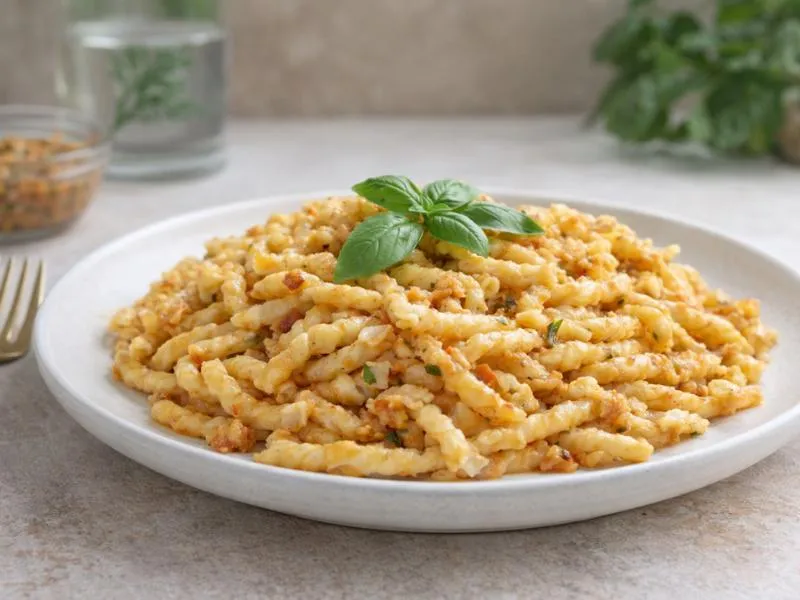
👉 View Authentic Recipe 👈
About This Dish
Busiate al Pesto Trapanese, known in English as Sicilian Pesto Pasta, comes from the coastal city of Trapani in western Sicily. Unlike Genoa’s famous basil pesto made with pine nuts, this Sicilian version incorporates fresh tomatoes and almonds, reflecting the island’s abundant agricultural resources and Arab culinary influences dating back to the 9th century. The dish showcases Sicily’s characteristic approach to raw, sun-ripened ingredients.
The name “busiate” refers to the corkscrew-shaped pasta traditionally made by wrapping dough around a thin reed called a “busa.” This shape’s grooves and spirals capture the chunky pesto beautifully.
The raw tomato sauce maintains bright, fresh flavors that would be lost through cooking, making this a quintessential summer dish enjoyed throughout western Sicily.
Trapani’s pesto gets its distinctive character from locally grown almonds rather than the pine nuts used in northern Italian versions. The addition of raw cherry tomatoes creates a lighter, fresher sauce compared to the thick, oily consistency of traditional Ligurian pesto. Sicilians typically prepare this dish when summer tomatoes reach peak ripeness and sweetness.
Our Recipe
This version delivers authentic Trapanese flavors while using ingredients easily found outside Sicily. The key is using ripe, sweet tomatoes and quality almonds to build the sauce’s foundation.
Ingredients
Serves 4 as a main course or 6 as a starter
- 1 pound busiate pasta (or substitute rotini or gemelli)
- 1½ cups cherry tomatoes or grape tomatoes
- 1 cup packed fresh basil leaves
- 3 tablespoons blanched almonds, lightly toasted
- 2 medium garlic cloves, peeled
- ½ cup extra-virgin olive oil
- ¼ cup freshly grated Parmigiano-Reggiano cheese, plus more for serving
- ½ teaspoon kosher salt
- Freshly ground black pepper
Instructions
-
Toast the almonds: Place almonds in a dry skillet over medium heat and toast until fragrant and lightly golden, about 3-4 minutes, shaking pan frequently. Let cool completely.
-
Make the pesto base: In a food processor, combine basil, garlic, toasted almonds, and salt. Pulse until finely chopped, scraping down sides as needed.
-
Add tomatoes and oil: Add cherry tomatoes to the processor. With the machine running, slowly drizzle in olive oil through the feed tube until the mixture becomes creamy but still textured. You want visible bits of tomato and almond, not a completely smooth purée.
-
Finish the pesto: Add Parmigiano-Reggiano and pulse just to combine. Taste and adjust salt if needed. The pesto should be thick enough to coat pasta but loose enough to flow. Transfer to a large serving bowl.
-
Cook the pasta: Bring a large pot of well-salted water to boil. Cook busiate according to package directions until al dente. Reserve ½ cup pasta cooking water before draining.
-
Combine and serve: Add hot drained pasta directly to the bowl with pesto. Toss vigorously, adding reserved pasta water 2 tablespoons at a time until the sauce coats every piece. The heat from the pasta will warm the pesto slightly and help it cling. Serve immediately with additional cheese and black pepper.
🧑🍳 Analyzed by CucinaBot
Why This Dish Works
The raw tomatoes release their natural sugars and acids when tossed with hot pasta, creating a light sauce that clings without heavy cream or excessive oil. Almonds provide both richness and a subtle sweetness that complements tomatoes’ acidity while adding body to the sauce.
The combination of raw ingredients preserves volatile aromatic compounds in basil and tomatoes that cooking would destroy, resulting in brighter, more vibrant flavors.
Key Success Factors
- Tomato ripeness: Use the ripest, sweetest tomatoes available—underripe tomatoes create an acidic, harsh sauce
- Texture control: Keep the pesto chunky rather than smooth; visible bits of almond and tomato are traditional
- Temperature contrast: The hot pasta should slightly warm the raw sauce without cooking it
- Pasta water technique: Add reserved cooking water gradually to achieve creamy consistency without diluting flavor
Common Pitfalls
Many recipes outside Sicily incorrectly add pine nuts instead of almonds, creating a flavor profile that’s too similar to Genovese pesto. Some versions overcomplicate the dish with ingredients like capers or anchovies, which aren’t traditional.
The most critical error is over-processing the pesto into a smooth purée—authentic Trapanese pesto should retain noticeable texture from the tomatoes and nuts.
How to Judge Authenticity
When reviewing recipes, look for these markers of authenticity:
- Uses almonds (blanched or toasted) rather than pine nuts
- Includes raw tomatoes as a primary ingredient, not just a garnish
- Calls for fresh basil in substantial quantity
- Specifies busiate or another twisted pasta shape to catch the chunky sauce
- Maintains a textured, chunky consistency rather than smooth purée