Crostini di Fegatini
Toasted bread topped with savory chicken liver paste flavored with sage, juniper, and anchovies.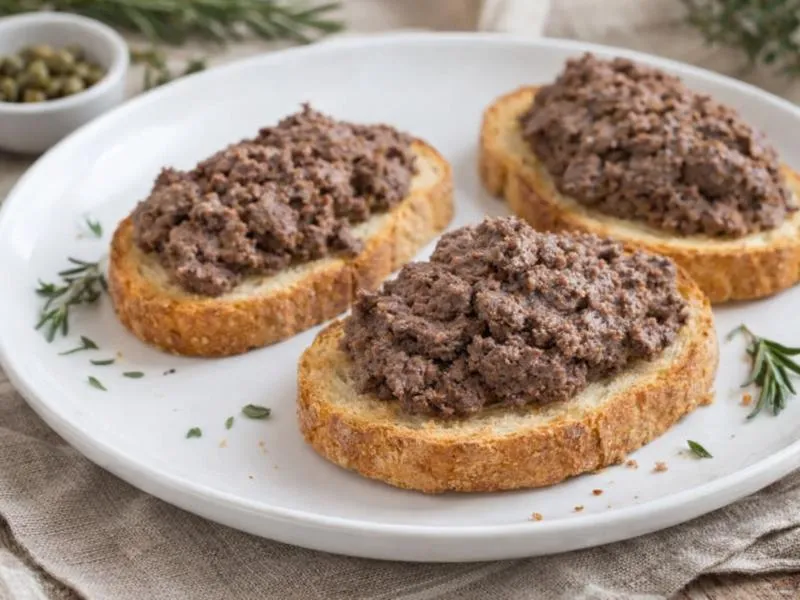
👉 View Authentic Recipe 👈
About This Dish
Crostini di Fegatini, also known as Tuscan Chicken Liver Crostini, is the quintessential Tuscan appetizer served at gatherings throughout the region. This dish features toasted bread slices topped with a rich, savory paste made from chicken livers that have been slowly simmered with aromatics until tender and flavorful. The livers are traditionally cooked with garlic, sage, and a splash of broth, then processed into a coarse spread.
What distinguishes authentic Tuscan versions is the addition of juniper berries, which lend an aromatic, slightly pine-like flavor that evokes the autumn hunting season when game birds were traditionally prepared. The paste is finished with finely chopped capers and anchovies, which dissolve into the mixture and provide depth without overwhelming fishiness. This combination creates a sophisticated balance of earthy, savory, and subtly sweet flavors.
The dish is typically served warm or at room temperature on slices of crusty Tuscan bread, though modern variations often use baguette for easier handling at cocktail parties. Many Tuscan home cooks insist the paste tastes even better when made a day ahead and gently reheated, as the flavors have time to fully meld together.
🧑🍳 Analyzed by CucinaBot
Why This Dish Works
The long, gentle cooking process transforms chicken livers from potentially grainy and metallic-tasting to silky and rich. Cooking livers in broth rather than just oil prevents them from drying out while building layers of flavor.
The juniper berries contain aromatic compounds (terpenes) that complement the iron-rich taste of liver, while the anchovies and capers provide glutamate compounds that boost umami depth. The paste achieves its ideal texture through brief processing - just enough to bind the ingredients without turning them into a homogeneous purée that loses character.
Key Success Factors
- Proper Cooking Time: The 15-20 minute simmer is essential - rushing this step produces grainy, metallic-tasting liver instead of smooth, mellow paste
- Coarse Texture: Process the livers just until roughly combined; over-processing creates baby-food texture and loses the rustic character
- Moisture Balance: The paste should be spreadable but not wet - reduce the broth properly before serving to prevent soggy bread
- Anchovy Integration: Add anchovies at the very end and simmer just until they melt completely into the paste, not before
Common Pitfalls
Many modern recipes drastically reduce cooking time, suggesting just 5 minutes until livers lose their pinkness. This produces harsh, metallic flavors that haven’t had time to mellow.
Some recipes replace the traditional soffritto of garlic and sage with onions or add wine, which changes the fundamental flavor profile. Using canned or jarred anchovies packed in oil rather than salt-packed varieties produces an inferior, fishier taste that overpowers rather than enhances.
How to Judge Authenticity
When reviewing recipes, look for these markers of authenticity:
- Extended cooking time of at least 15-20 minutes for the livers
- Includes juniper berries as a flavoring element
- Uses chicken livers exclusively without mixing in other organ meats or sausage
- Specifies rough-textured paste rather than smooth purée
- Finishes with anchovies and capers added at the end of cooking