Frittata di Cipolle
Italian egg frittata with caramelized onions, Parmigiano-Reggiano, and optional fresh chili.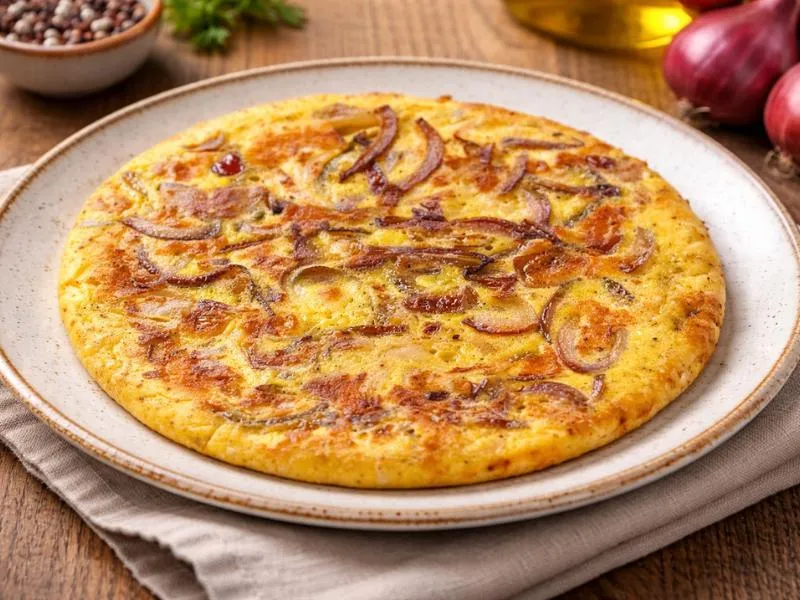
👉 View Authentic Recipe 👈
About This Dish
Frittata di Cipolle, or Frittata with Onions, represents one of the simplest yet most satisfying preparations in Italian home cooking. Unlike its French cousin the omelet, which remains soft and folded, the Italian frittata is cooked fully on both sides until set, creating a firm, sliceable dish that’s equally delicious served hot, warm, or at room temperature.
The magic lies in slowly caramelizing the onions until they become sweet and soft, then binding them with beaten eggs and sharp Parmigiano-Reggiano cheese.
This versatile dish appears throughout Italy as a quick weeknight dinner, a light lunch paired with crusty bread and salad, or cut into wedges as part of an antipasto spread.
The frittata tradition dates back centuries, born from Italian thriftiness—using simple pantry ingredients to create a substantial meal. While red onions are common, yellow or white onions work equally well, each bringing slightly different sweetness profiles.
Frittata di Cipolle can be served alongside cured meats like prosciutto, salami, or pancetta, making it perfect for casual entertaining or picnics since it travels well and needs no reheating.
Our Recipe
This recipe uses the traditional stovetop method, cooking the frittata on both sides for even texture throughout while keeping the preparation straightforward.
Ingredients
Serves 2 as a main course or 4 as an appetizer
- 5 large eggs
- 2 medium red onions (or yellow/white onions)
- 1/3 cup freshly grated Parmigiano-Reggiano (or Pecorino Romano for a sharper flavor)
- 1 small fresh red chili, whole (optional)
- 3 tablespoons extra-virgin olive oil
- Salt to taste
- Freshly ground black pepper to taste
Instructions
-
Prepare the egg mixture: Crack the eggs into a medium bowl and beat them until the yolks and whites are well combined. Season with salt and freshly ground black pepper, then stir in the grated cheese. Mix just until incorporated and set aside.
-
Slice the onions: Peel and cut the onions into thin slices, keeping them fairly substantial rather than mincing them finely. This preserves their texture in the finished frittata.
-
Caramelize the onions: Heat the olive oil in a large nonstick or well-seasoned pan over medium heat. Add the sliced onions and the whole chili if using. Reduce heat to low and cook gently, stirring occasionally, for about 10-12 minutes until the onions become very soft and lightly golden. The slow cooking develops their natural sweetness.
-
Combine and start cooking: Remove and discard the whole chili. Pour the beaten egg mixture directly over the onions in the pan, stirring quickly once to distribute the onions throughout. Spread the mixture evenly in the pan, then cover with a lid. Cook over medium heat for 7-8 minutes, occasionally using a fork to gently pierce the frittata and lift the edges with a spatula, allowing uncooked egg from the top to flow underneath. Check the bottom periodically to prevent burning.
-
Flip and finish: When the top is mostly set with just a slightly wet surface, place a large flat plate over the pan. Holding the plate firmly against the pan, quickly invert both together so the frittata releases onto the plate. Slide the frittata back into the pan, cooked side up. Cook for an additional 4-5 minutes until the second side is golden and the center is fully set.
-
Serve: Invert the frittata onto a serving plate. Serve warm, at room temperature, or cold. Cut into wedges and enjoy on its own, with crusty bread, alongside cured meats, or with a simple green salad.
🧑🍳 Analyzed by CucinaBot
Why This Dish Works
The prolonged cooking of onions transforms their sharp sulfur compounds into sweet, mellow sugars through the Maillard reaction and caramelization. When bound with eggs and cheese, this sweetness creates a satisfying contrast with the savory, slightly funky notes from the Parmigiano-Reggiano.
The protein structure in eggs coagulates slowly over gentle heat, creating a tender rather than rubbery texture. The optional chili adds subtle background heat without overwhelming the onions’ natural sweetness.
Key Success Factors
- Low and slow onions: Rushing the onion cooking produces harsh, undercooked flavors instead of the desired sweetness—patience is essential
- Proper flip timing: The frittata should be mostly set but still slightly wet on top when you flip it; if fully set, it becomes difficult to flip and may crack
- Pan temperature control: Medium heat prevents the bottom from burning while allowing the eggs to cook through evenly
- Quality cheese: Freshly grated Parmigiano-Reggiano provides superior flavor and texture compared to pre-grated cheese, which often contains anti-caking agents that affect the final result
Common Pitfalls
Many home cooks make frittatas too thick for proper cooking or attempt to finish them under the broiler, which can create an overcooked exterior with an undercooked center.
The authentic Italian method involves careful stovetop cooking on both sides. Another mistake is adding the eggs to onions that haven’t fully softened, resulting in crunchy rather than sweet onion bites. Finally, oversalting before tasting the final product—the Parmigiano-Reggiano contributes significant saltiness on its own.
How to Judge Authenticity
When reviewing recipes, look for these markers of authenticity:
- Stovetop cooking method rather than oven finishing
- Proper caramelization of onions as a distinct step before adding eggs
- Minimal ingredients—eggs, onions, cheese, olive oil, salt, and pepper
- Instructions for flipping the frittata to cook both sides
- Serving suggestions that include room temperature or cold options, not just hot