Gnocchi alla Romana
Baked semolina discs enriched with egg yolks, Parmigiano-Reggiano, and butter, finished golden and crisp in the oven.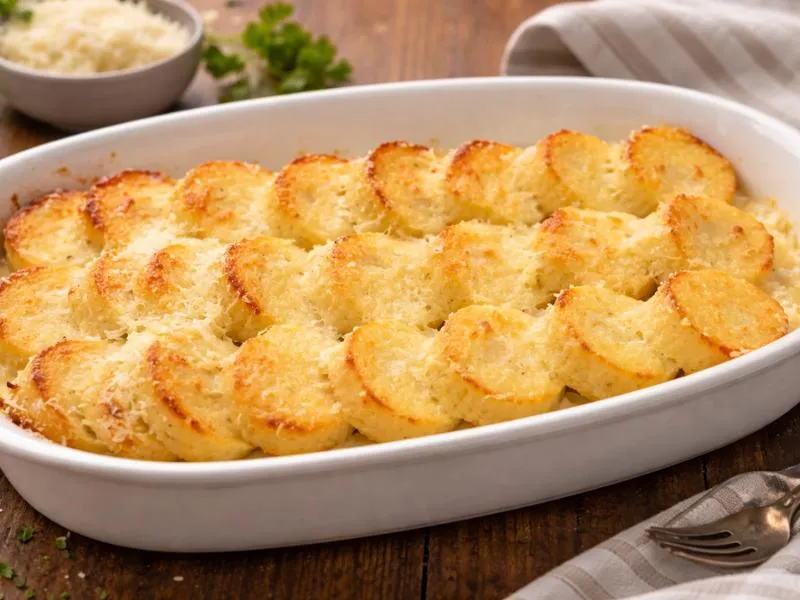
👉 View Authentic Recipe 👈
About This Dish
Gnocchi alla Romana — known in English as Roman-Style Gnocchi — is one of Lazio’s most distinctive and often misunderstood dishes. Unlike the soft potato dumplings that come to mind when most people hear the word “gnocchi,” this preparation starts with semolina cooked in hot milk into a thick porridge, which is then cooled, cut into rounds, and baked until golden.
The result is something closer to a gratin than a dumpling: crisp on top, tender within, and deeply savory from generous amounts of Parmigiano-Reggiano and butter.
The dish has deep roots in the cucina povera tradition of Lazio. Historical accounts from Rome connect it to a strong Thursday ritual — families would prepare this filling, inexpensive dish on Thursdays so they could eat more lightly on Fridays, in keeping with Catholic fasting customs.
The main ingredient, durum wheat semolina, was a staple long before the arrival of potatoes in Europe, leading food historians to consider this one of the oldest forms of gnocchi on the Italian peninsula.
Traditional Gnocchi alla Romana relies on just a handful of ingredients: semolino (coarse semolina), whole milk, egg yolks, butter, and Parmigiano-Reggiano. Nutmeg provides a subtle warmth that binds the flavors together. The classic dressing is simply melted butter and grated cheese — no tomato sauce, no bechamel, no embellishment.
Regional variations do exist (some families add spinach to the dough, others top with a light bechamel), but the restrained, butter-and-cheese version remains the Roman standard.
Our Recipe
This recipe follows the traditional Roman approach: cooked semolina, enriched with egg yolks and cheese, chilled until firm, cut into rounds, then baked until the tops turn a deep, spotted gold. The result doubles as a first course or a hearty side dish.
Ingredients
Serves 4 as a first course or 6 as a side dish
- 4 cups whole milk
- 1 cup cold water
- 1½ teaspoons fine sea salt
- Pinch of freshly grated nutmeg
- 1¼ cups coarse semolina (semolino)
- 4 tablespoons unsalted butter, divided, plus extra for the pan
- 2 large egg yolks
- 1½ cups freshly grated Parmigiano-Reggiano, divided
- Freshly ground black pepper, to taste
Instructions
-
Prepare your surface: Lightly oil or wet a rimmed half-sheet pan (approximately 13” x 18”). This prevents the semolina mixture from sticking as it sets.
-
Heat the liquid: Combine the milk, water, salt, and nutmeg in a medium-to-large heavy saucepan over medium heat. Bring to a gentle simmer, stirring occasionally.
-
Cook the semolina: Reduce heat to medium-low. Pour the semolina into the hot liquid in a slow, steady stream while whisking constantly to prevent lumps from forming. Once the mixture begins to thicken — about 1–2 minutes — switch to a wooden spoon or flexible spatula and continue stirring vigorously. Cook for 10–15 minutes, until the mixture pulls away from the sides of the pan and holds its shape when a spoonful is lifted. It should be the consistency of very stiff porridge.
-
Enrich off the heat: Remove the pan from the heat immediately. Stir in 2 tablespoons of the butter until fully melted. Add 1 cup of the Parmigiano-Reggiano and stir to incorporate. Add the egg yolks one at a time, beating vigorously after each addition to fully combine before adding the next. Taste and adjust salt and pepper.
-
Spread and chill: Working quickly, pour the hot semolina onto the prepared sheet pan and use a dampened spatula to spread it into an even slab approximately ½ inch thick. Allow to cool at room temperature for 20 minutes, then cover loosely and refrigerate until fully firm, at least 1 hour (or overnight).
-
Cut the rounds: Preheat the oven to 400°F. Generously butter a 9” x 13” baking dish. Using a 2½-inch round cutter, stamp out as many circles as possible from the chilled semolina slab. Press any scraps together and cut additional rounds from the remaining dough — these can line the bottom of the baking dish.
-
Layer and top: Spread a thin layer of the scraps across the bottom of the prepared baking dish. Arrange the rounds on top in overlapping rows, like roof shingles. Scatter the remaining 2 tablespoons of butter, cut into small cubes, across the surface. Sprinkle the remaining ½ cup of Parmigiano-Reggiano evenly over the top.
-
Bake and serve: Bake for 25–30 minutes, until the tops of the rounds are spotted golden brown and the cheese has melted into a lightly crisp crust. Allow to rest for 5 minutes before serving directly from the baking dish.
🧑🍳 Analyzed by CucinaBot
Why This Dish Works
Gnocchi alla Romana succeeds because of a two-stage cooking process that builds both structure and flavor. During the stovetop phase, the semolina starches fully hydrate and gelatinize in the hot milk, creating a dense, cohesive matrix.
Egg yolks add richness and act as an emulsifier, while fat from the butter coats the starch granules and keeps the texture from becoming gummy.
In the oven, the exposed surfaces undergo the Maillard reaction — browning the cheese and butter into a savory crust — while the interior retains a soft, creamy core. The contrast between the golden crust and the tender center is what makes the dish so satisfying.
Key Success Factors
- Semolina grain size matters: Use coarse semolina (semolino), not fine semolina flour used for pasta. The coarser grind gives the gnocchi body and prevents them from turning gluey after baking.
- Stir constantly during cooking: Lumps form within seconds if the semolina is added without continuous agitation. Keep whisking until fully incorporated, then switch to a spoon.
- Chill completely before cutting: If the semolina slab is warm or even slightly soft, the rounds will lose their shape when transferred. Full refrigeration — ideally overnight — produces clean, sturdy discs.
- Don’t skip the egg yolks: They bind the mixture, add richness, and help the gnocchi hold together through the baking process. Some older recipes omit them, but the texture is noticeably better with them.
Common Pitfalls
The most common mistake is undercooking the semolina on the stovetop. If the porridge is removed from the heat too soon, the gnocchi will lack structural integrity and slump when baked rather than holding their shape. A properly cooked batch will be thick enough to resist falling off a spoon when turned sideways.
Another frequent error is using fine semolina flour (the kind used for making pasta dough) instead of coarse semolino; the result is a much denser, heavier texture that doesn’t bake as well. Finally, rushing the chilling step is a predictable source of frustration — soft rounds tear when transferred to the baking dish and collapse into an unappetizing mass.
How to Judge Authenticity
When reviewing recipes, look for these markers of authenticity:
- Calls for coarse semolina (semolino), not fine semolina flour or polenta
- Uses whole milk as the cooking liquid — water alone produces a flat-tasting result
- Includes egg yolks (not whole eggs), enriching without making the dough too loose
- Specifies Parmigiano-Reggiano, not a generic “parmesan” substitute
- Tops with butter and cheese only — the traditional Roman version contains no tomato sauce, bechamel, or mozzarella in the classic preparation