La Cecina Toscana
Crispy chickpea flatbread from Tuscany made with chickpea flour, water, and olive oil.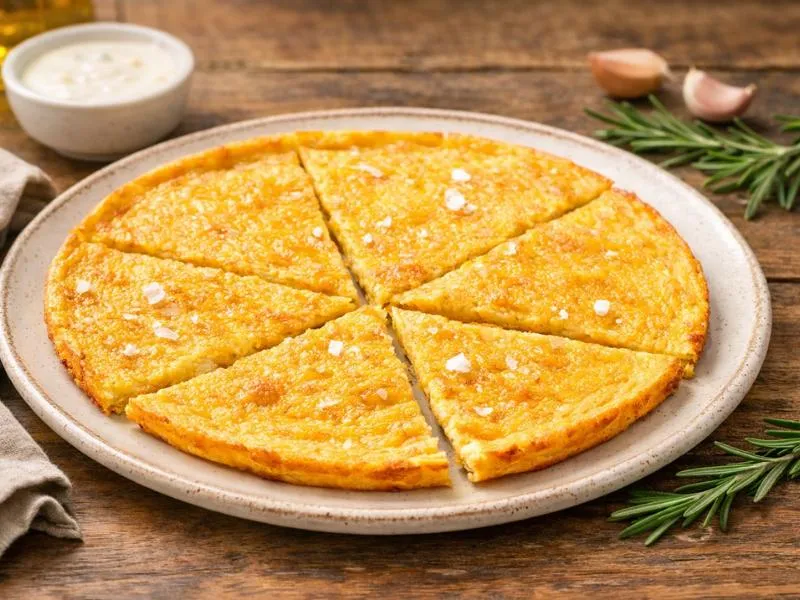
👉 View Authentic Recipe 👈
About This Dish
La Cecina Toscana (also known as Italian Farinata Chickpea Flatbread or simply Torta di Ceci) is a traditional Tuscan street food that has been enjoyed for centuries, particularly in coastal cities like Livorno and Pisa. This minimalist preparation requires just four ingredients—chickpea flour, water, olive oil, and salt—yet produces a remarkably satisfying result with a golden, crispy exterior and creamy interior.
The dish’s origins trace back to the maritime trade routes when chickpea flour became an accessible staple ingredient. In Livorno, cecina achieved particular fame as a key component of the beloved “cinque e cinque” sandwich, where a slice of warm chickpea flatbread is paired with marinated eggplant inside a crusty roll. The preparation traditionally uses large, shallow copper pans heated in wood-fired ovens, though modern home cooks achieve excellent results with pizza pans or cast iron skillets.
What distinguishes authentic cecina is its thinness (no more than 5mm thick), the long resting period for the batter (minimum 2 hours), and the characteristic speckled golden surface created by high-heat baking. Unlike similar preparations from other regions, Tuscan cecina remains intentionally simple, allowing the nutty flavor of chickpea flour and quality olive oil to shine without competing seasonings beyond salt and occasionally rosemary.
🧑🍳 Analyzed by CucinaBot
Why This Dish Works
The extended resting period allows the chickpea flour to fully hydrate, creating a batter that transforms dramatically when exposed to high heat. As water evaporates during baking, the proteins in chickpea flour coagulate while starches gelatinize, forming a structure that’s simultaneously firm and creamy.
The generous olive oil creates a fried effect on the bottom surface, developing complex flavors through the Maillard reaction while preventing sticking. The paper-thin batter ensures rapid moisture evaporation, producing the signature crispy top surface within 15-20 minutes.
Key Success Factors
- Batter Consistency: The mixture should be completely liquid (like pancake batter), not thick—any lumps compromise the final texture
- Resting Time: The full 2-hour rest at room temperature is non-negotiable for proper hydration and flavor development
- Thinness: Pour batter no thicker than 5mm (1/4 inch); thicker preparations turn dense rather than maintaining the creamy-crispy contrast
- Pan Temperature: The oven must be fully preheated to 450°F/230°C before baking—lower temperatures produce soggy results
- Oil Generosity: Don’t skimp on olive oil for greasing the pan; it prevents sticking and creates essential crispness
Common Pitfalls
Many recipes overcomplicate cecina by adding garlic, herbs throughout the batter, or cheese—none of which appear in traditional Tuscan versions. The most frequent mistake is using baking pans that are too deep or have ridges, which create uneven thickness. Thin metal baking sheets can warp under high heat, causing the batter to pool. Skipping the resting period results in a dense, floury texture rather than the characteristic creamy interior. Finally, attempting to serve cecina cold or reheated destroys its textural appeal—this dish demands immediate consumption while hot.
How to Judge Authenticity
When reviewing recipes, look for these markers of authenticity:
- Specifies a full 2-hour minimum resting time for the batter at room temperature
- Uses only chickpea flour, water, olive oil, and salt (optional rosemary on top, not in batter)
- Emphasizes the importance of 5mm (1/4 inch) maximum thickness
- Requires very high oven temperature (450°F/230°C or higher)
- Instructs generous oiling of the pan and mentions the golden, crispy surface as the indicator of doneness