Pasta with Mussels and Pecorino
Fresh mussels tossed with pasta in a white wine broth, finished with sharp pecorino cheese.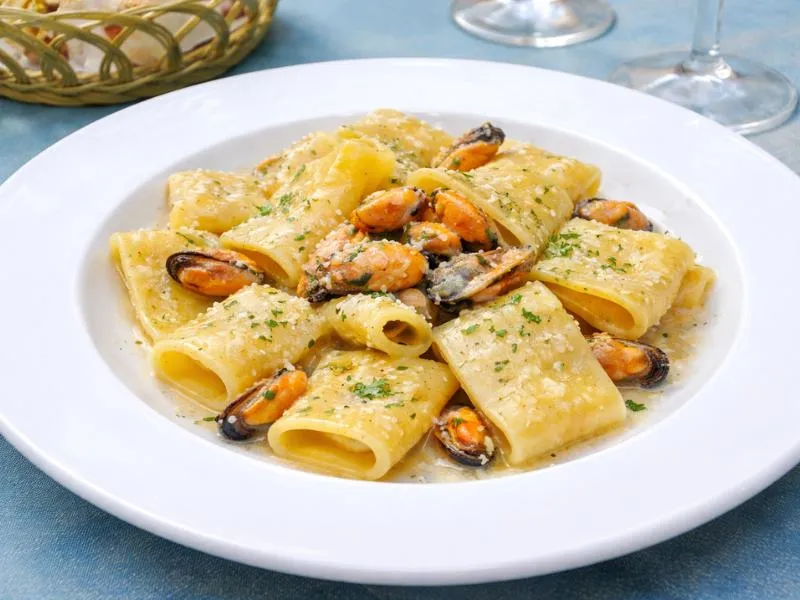
👉 View Authentic Recipe 👈
About This Dish
This dish represents the coastal cooking traditions of central Italy, particularly popular in Lazio and along the Tyrrhenian coast where fresh mussels are abundant. The combination of briny mussels with sharp, salty pecorino Romano creates a distinctive flavor profile that sets this apart from similar seafood pasta dishes found in southern Italy.
The preparation is deceptively simple: mussels are steamed open in white wine with garlic and parsley, then tossed with al dente pasta and finished with grated pecorino. The mussel cooking liquid becomes the sauce, creating a light broth that coats each strand of pasta without overwhelming the delicate seafood flavor.
Traditionally served as a primo piatto during warmer months, this dish exemplifies the Italian philosophy of letting quality ingredients speak for themselves. The pecorino adds a savory depth that complements rather than competes with the sweet, oceanic taste of fresh mussels.
🧑🍳 Analyzed by CucinaBot
Why This Dish Works
The success of this dish relies on the natural brininess of mussels enhancing the sharp, tangy pecorino cheese. When the starchy pasta water combines with the mussel steaming liquid and melted pecorino, it creates an emulsified sauce through mechanical action. The wine’s acidity brightens the dish while cutting through the richness of the cheese, and the garlic provides aromatic backbone without overpowering the seafood.
Key Success Factors
- Mussel Quality: Use only tightly closed, fresh mussels with a clean ocean smell—discard any that don’t open during cooking
- Pasta Water Reserve: Save at least a cup of starchy cooking water to help emulsify the pecorino into a creamy sauce
- Timing: Add the pasta to the mussels when it’s 2 minutes shy of al dente, finishing it in the mussel liquid
- Pecorino Temperature: Remove from heat before adding pecorino to prevent the cheese from becoming grainy or clumping
Common Pitfalls
Many recipes incorrectly treat this as a cream-based dish or substitute Parmigiano for pecorino, fundamentally changing the flavor profile. Overcooking the mussels makes them rubbery, while adding the cheese over direct heat causes it to seize and become stringy rather than creating a smooth, silky coating.
How to Judge Authenticity
When reviewing recipes, look for these markers of authenticity:
- Uses pecorino Romano specifically, not Parmigiano-Reggiano
- No cream, butter, or tomatoes in the sauce
- Calls for dry white wine to steam the mussels
- Minimal ingredients—garlic, parsley, white wine, olive oil, mussels, pasta, pecorino
- Instructions emphasize finishing the pasta in the mussel cooking liquid