Piadina Romagnola
Traditional flatbread from Romagna with lard, griddled to create a soft, savory base for countless fillings.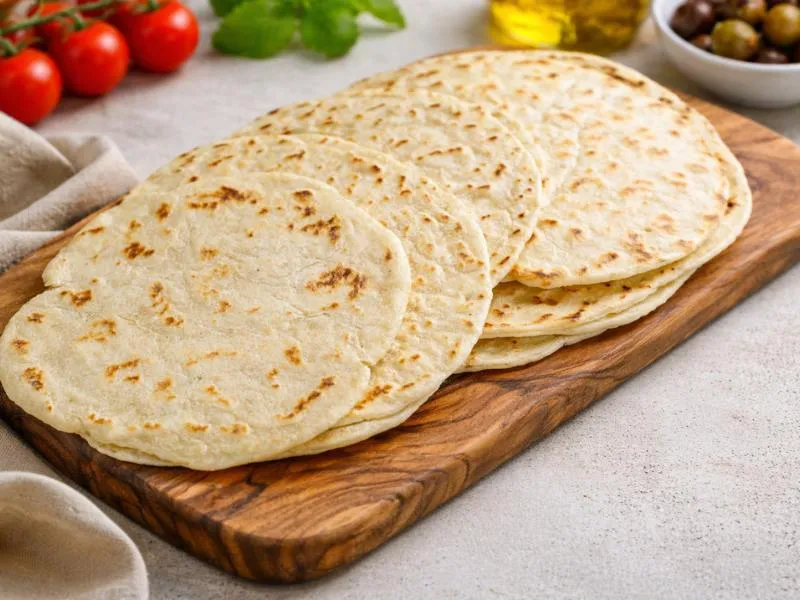
👉 View Authentic Recipe 👈
About This Dish
Piadina Romagnola (Flatbread from Romagna) is a beloved street food from the Emilia-Romagna region, particularly associated with beach towns along the Adriatic coast like Rimini. This unleavened or lightly leavened flatbread has ancient origins, with traces suggesting it dates back to Roman times when soldiers may have cooked similar breads over fires. Unlike pizza, piadina is griddled rather than baked, creating a distinctive texture that’s both soft and slightly chewy with characteristic brown spots.
The traditional preparation uses a simple dough enriched with lard (or olive oil), which gives the bread its savory flavor and tender crumb. Historically cooked on a terracotta disk called a testo romagnolo, today’s versions are typically made on cast iron griddles or non-stick skillets. The flatbread serves as a versatile vehicle for countless fillings, from the classic combination of prosciutto di Parma, soft cheese, and arugula to grilled vegetables, sausages, or even sweet preparations.
Piadina represents the resourcefulness of Romagna’s peasant cooking tradition—a few basic ingredients transformed through simple technique into something deeply satisfying. It’s enjoyed year-round but holds special significance as beach food during summer months, when street vendors serve freshly made piadine to sunbathers and tourists.
🧑🍳 Analyzed by CucinaBot
Why This Dish Works
The magic of piadina lies in its fat-enriched dough, which creates tender layers through steam during cooking. Lard provides superior flavor and texture compared to oil, contributing savory notes while keeping the dough pliable. The high-heat griddling creates the Maillard reaction on the surface, producing those characteristic brown spots that add nutty, toasted flavors. The slight leavening from baking powder creates just enough lift for a soft interior while maintaining the flatbread’s essential chewiness.
Key Success Factors
- Proper Fat Integration: Work the lard thoroughly into the flour until it resembles pebbly sand—this creates the tender texture
- Dough Hydration: Add water gradually until you achieve a soft but not sticky consistency; too much makes cooking difficult, too little creates tough bread
- Resting Time: The 30-minute rest allows gluten to relax, making the dough easier to roll and preventing shrinkage during cooking
- Heat Control: Medium heat after initial preheating is crucial—too hot burns the outside before the inside cooks, too low creates pale, tough bread
Common Pitfalls
Many modern recipes skimp on fat or substitute all oil for lard, which compromises both flavor and texture. Store-bought versions available outside Italy typically use oil and lack the authentic savory character. Another mistake is rolling the dough too thin or too thick—aim for approximately 3-5mm thickness for the ideal balance of crispy exterior and tender interior. Overcrowding the cooking surface or not maintaining consistent heat leads to uneven cooking with some areas remaining raw while others burn.
How to Judge Authenticity
When reviewing recipes, look for these markers of authenticity:
- Contains lard as the primary fat (50-125g per 500g flour), not just olive oil
- Includes minimal or no leavening—traditional versions use none, modern ones add small amounts of baking powder
- Specifies griddling at medium-high heat on a flat surface, not baking in an oven
- Recommends a 30-minute rest period for the dough before shaping
- Results in flatbreads with characteristic brown spots and soft, pliable texture