Risotto ai Quattro Formaggi
Creamy risotto enriched with four melting cheeses for rich, indulgent comfort.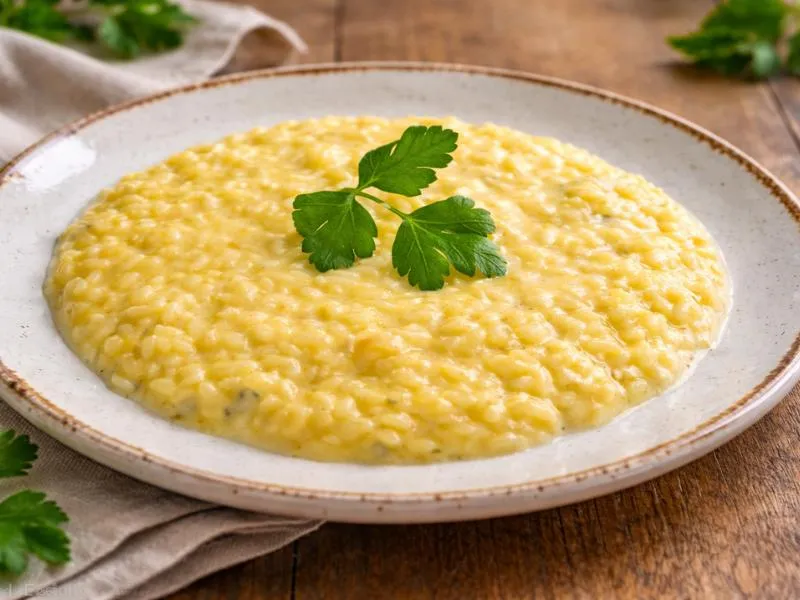
👉 View Authentic Recipe 👈
About This Dish
Risotto ai quattro formaggi (four cheese risotto) stands as one of northern Italy’s most indulgent rice dishes, particularly beloved in Lombardy where risotto culture runs deep. While pasta ai quattro formaggi enjoys worldwide fame, the risotto version may be even more luxurious thanks to rice’s superior ability to absorb and carry the creamy cheese flavors.
The dish follows the classic risotto technique but finishes with generous amounts of four different melting cheeses instead of the usual spoonful of Parmigiano-Reggiano.
Traditional combinations include a sharp aged cheese like Parmigiano-Reggiano, a creamy soft cheese such as Taleggio, a pungent blue like Gorgonzola, and a semi-soft Alpine cheese like Gruyère or Fontina. The specific four cheeses aren’t rigidly defined—the beauty lies in balancing sharp and mild, firm and creamy textures.
This is pure comfort food served at home rather than in restaurants, often appearing at family tables during colder months when rich, warming dishes are most appreciated. The dish showcases the Italian principle that quality ingredients need little embellishment—here, excellent cheese and properly cooked Carnaroli rice create something far greater than the sum of their parts.
Our Recipe
This recipe delivers authentic Italian flavor while remaining accessible to home cooks. The key is patience during cooking and quality cheese selection.
Ingredients
Serves 4
- 1-1/3 to 2 cups Carnaroli or Arborio rice for risotto
- 1 medium onion, finely chopped
- 3 tablespoons unsalted butter, divided
- 1/2 cup dry white wine
- 4 cups vegetable broth, heated (or lightly salted water)
- 10 to 11 ounces mixed meltable cheeses, rinds removed, grated or diced (see notes)
- Salt
- Few drops of water (for cooking onion)
Suggested Cheese Combination:
- 2.5 ounces Parmigiano-Reggiano, finely grated
- 2.5 ounces Taleggio, cubed
- 2.5 ounces Gorgonzola, crumbled
- 2.5 ounces Gruyère or Emmental, coarsely grated
Instructions
-
Prepare your mise en place: Heat the vegetable broth in a separate pot and keep it warm over low heat. Prepare all cheeses by trimming rinds and cutting or grating as specified. Have everything ready before you begin cooking.
-
Start the soffritto: Melt 2 tablespoons of butter in a heavy-bottomed saucepan over medium-low heat. Add the chopped onion along with a pinch of salt and a few drops of water to prevent browning. Cook gently, stirring occasionally, until the onion becomes soft and translucent, about 5 to 7 minutes.
-
Toast the rice: Add the rice to the pan and stir to coat each grain with the butter and onion mixture. Continue stirring for 2 to 3 minutes until the rice grains turn chalky white. Take care that neither the onion nor the rice browns—this would compromise the dish’s delicate flavor and color.
-
Deglaze with wine: Pour in the white wine and stir continuously as it evaporates, about 1 to 2 minutes. This adds subtle acidity that will balance the richness of the cheeses.
-
Cook the risotto: Begin adding the warm broth one ladleful at a time, stirring frequently. Allow each addition to be absorbed before adding the next, adjusting heat to maintain a gentle simmer. Continue this process for 18 to 20 minutes until the rice is al dente—tender with a slight firmness in the center.
-
Finish with cheese: When the rice is cooked, remove the pan from heat immediately. Add about half a ladleful of broth (or water), the remaining tablespoon of butter, and all of the mixed cheeses. Stir vigorously for 1 to 2 minutes until the rice achieves a uniform, creamy consistency. The risotto should flow like lava when spooned onto a plate (all’onda).
-
Serve immediately: Spoon the risotto into warmed shallow bowls and serve at once. The dish cannot wait—risotto loses its signature creaminess within minutes of preparation.
🧑🍳 Analyzed by CucinaBot
Why This Dish Works
The magic happens through starch and fat interaction. Rice’s high starch content (especially Carnaroli variety) creates natural creaminess that binds with cheese fats, while gentle heat allows proteins to melt smoothly without separating or becoming stringy.
The cheeses are added off-heat—a critical technique that preserves their delicate flavors which cooking would otherwise denature. Multiple cheese varieties create flavor complexity: sharp aged notes from Parmigiano, earthy funk from Taleggio, blue-veined pungency from Gorgonzola, and nutty Alpine character from Gruyère work together like a chord rather than a single note.
Key Success Factors
- Carnaroli Rice: Choose Carnaroli over other risotto varieties for its superior creaminess and ability to remain al dente
- Off-Heat Cheese Addition: Add all cheeses after removing from heat with extra liquid—cooking denatures cheese flavors
- Aggressive Stirring: Vigorously stir when incorporating cheeses and butter to achieve silky, uniform texture (la mantecatura)
- Cheese Preparation: Finely grate hard cheeses, coarsely grate semi-soft ones, and dice soft cheeses so they melt quickly from residual heat alone
- Light Broth: Use vegetable broth or lightly salted water instead of meat broth which would overpower the cheese flavors
Common Pitfalls
Many recipes add cream (unnecessary—the cheese provides all needed richness) or cook the cheese directly in the pan, which makes it stringy and mutes the flavors. Another mistake is using meat-based broth that fights with rather than supports the cheese.
The biggest error is insufficient cheese—authentic versions use a 1:1 ratio of uncooked rice to cheese by weight, not a cautious sprinkling. Some cooks also fail to trim cheese rinds, which create unpleasant chewy bits that ruin the dish’s trademark silky smoothness.
How to Judge Authenticity
When reviewing recipes, look for these markers of authenticity:
- Calls for vegetable broth or plain water rather than meat-based stock
- Instructs adding cheese off-heat with vigorous stirring (mantecatura technique)
- Specifies generous cheese quantities (approximately equal to rice weight)
- Recommends Carnaroli rice specifically for maximum creaminess
- Mentions achieving a loose, flowing consistency (all’onda) rather than thick porridge