Risotto con Salsiccia
Creamy Arborio rice cooked with Italian sausage, white wine, and Parmigiano-Reggiano.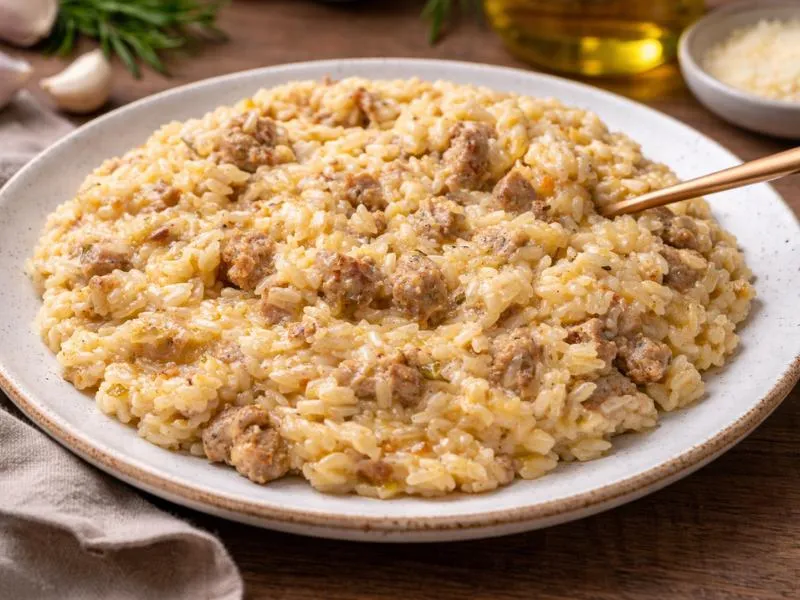
👉 View Authentic Recipe 👈
About This Dish
Risotto con Salsiccia (Risotto with Italian Sausage) is a hearty Northern Italian dish that originated in Lombardy, the region that perfected risotto-making techniques. The dish combines the creamy, almost porridge-like texture of properly cooked Arborio rice with the robust, fennel-spiced flavor of Italian sausage, typically made from pork with wine and aromatics.
Traditional versions use fresh Italian sausage removed from its casing and crumbled into the pan, where it releases flavorful oils that coat each grain of rice. The sausage is often luganega, a mild coiled sausage from Northern Italy, though any quality Italian pork sausage works well. The dish became popular as a satisfying winter meal in farmhouses throughout Lombardy and Veneto.
The key to this risotto is building layers of flavor by browning the sausage first, then using its rendered fat to toast the rice before gradually adding hot broth. Unlike heavily sauced pasta dishes, risotto con salsiccia relies on the starch released from the rice during constant stirring to create its signature creamy consistency without cream.
🧑🍳 Analyzed by CucinaBot
Why This Dish Works
The dish succeeds through a series of flavor-building steps. Browning the sausage creates Maillard reaction compounds that add depth, while its fat becomes the cooking medium for toasting the rice. As the rice slowly absorbs hot broth, its outer starch layer breaks down and suspends in the liquid, creating a natural cream sauce.
The sausage’s fennel and spice notes permeate each grain through constant stirring, while the final addition of butter and cheese (mantecatura) emulsifies everything into a cohesive, velvety texture.
Key Success Factors
- Constant Stirring: Continuous movement releases starch from the rice surface and prevents uneven cooking
- Hot Broth Addition: Cold liquid shocks the rice and stops the cooking process; broth must be simmering
- Proper Rice Variety: Only Arborio, Carnaroli, or Vialone Nano have sufficient starch content for authentic texture
- Al Dente Finish: The rice should have a slight bite in the center when you remove it from heat; residual heat continues cooking
- Mantecatura: The final addition of cold butter and cheese off-heat creates the signature wave-like consistency (all’onda)
Common Pitfalls
Many recipes add cream or milk, which masks the natural creaminess that proper technique creates and makes the dish heavy. Using pre-cooked or leftover rice is impossible—risotto requires building starch gradually through the cooking process. Another common mistake is adding all the broth at once instead of ladleful by ladleful, which prevents proper starch development and creates mushy, overcooked rice.
How to Judge Authenticity
When reviewing recipes, look for these markers of authenticity:
- Specifies toasting (tostatura) the rice in fat before adding any liquid
- Calls for gradual broth addition in small amounts as liquid is absorbed
- Uses Italian sausage removed from casing, not sliced rounds
- Includes the mantecatura step (butter and cheese stirred in off-heat at the end)
- Achieves all’onda consistency—the risotto should flow like a wave when the plate is tilted