Spaghetti alla Carbonara
Silky pasta tossed with egg yolks, pecorino romano, crispy guanciale, and black pepper.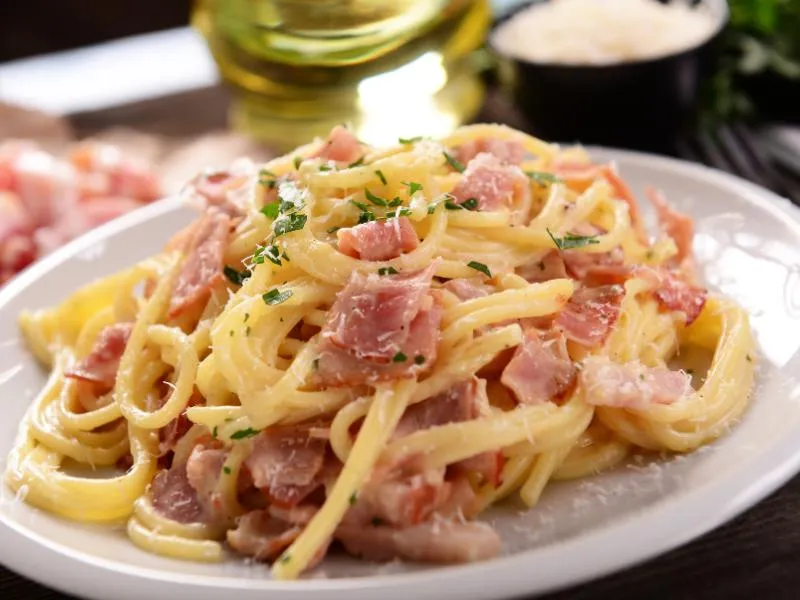
👉 View Authentic Recipe 👈
About This Dish
Spaghetti alla Carbonara (Spaghetti Carbonara in English) is Rome’s most iconic pasta dish, requiring only four core ingredients beyond the pasta itself: egg yolks, pecorino romano cheese, guanciale (cured pork jowl), and black pepper. Despite its worldwide fame, authentic carbonara contains no cream, no garlic, and no peas—additions that make Roman chefs visibly wince.
The dish’s origins remain debated, though most historians trace it to post-World War II Rome, when American soldiers’ rations of bacon and powdered eggs met Italian culinary ingenuity. The name likely derives from “carbonaro” (charcoal burner), possibly referencing the liberal use of black pepper that resembles coal dust, or the charcoal workers who may have popularized the dish.
The technique is deceptively simple but requires precise timing: hot pasta water gradually tempers beaten egg yolks to create a velvety sauce without scrambling. Traditional Romans use only yolks for richness, though some home cooks add one whole egg for a slightly lighter texture. The rendered fat from guanciale becomes part of the sauce, adding depth that pancetta or bacon cannot fully replicate.
Our Recipe
This recipe follows Rome’s traditional method while providing clear guidance for achieving the perfect creamy consistency. The key is understanding pasta water temperature and constant tossing.
Ingredients
Serves 3-4 as a main course
- 10 ounces dried spaghetti
- 4 large egg yolks
- 1 cup freshly grated pecorino romano cheese, plus extra for serving
- ½ to 1 teaspoon freshly ground black pepper
- 2 tablespoons extra-virgin olive oil
- ½ to ¾ cup guanciale, sliced into short thin strips (about 3-4 ounces)
- Salt for pasta water (use sparingly, as guanciale is salty)
Instructions
-
Cook the pasta: Bring a large pot of water to a rolling boil. Add a modest amount of salt (less than usual, since guanciale adds saltiness). Add spaghetti and cook until slightly more than al dente, stirring occasionally. Reserve 1½ cups of pasta water before draining.
-
Prepare the egg mixture: While pasta cooks, whisk egg yolks in a medium bowl until smooth. Add pecorino romano and black pepper, whisking thoroughly to combine. Just before using, add ⅓ cup hot pasta water to the mixture and whisk vigorously to temper the eggs.
-
Render the guanciale: Heat olive oil in a large skillet over medium heat. Add guanciale strips and cook until they reach your preferred texture—about 5-7 minutes for crispy edges. Remove guanciale to a plate using a slotted spoon. Leave the rendered fat and oil in the pan.
-
Combine pasta with fat: Increase heat to medium-high. Add drained pasta to the skillet with the fat. Pour in ½ cup hot pasta water and toss vigorously for 1-2 minutes, allowing the pasta to absorb the flavors.
-
Create the sauce: Remove pan from heat immediately. Working quickly, pour the egg-cheese mixture over the pasta and toss continuously with tongs or a wooden spoon. Add another ⅓ cup hot (not boiling) pasta water gradually while tossing. The residual heat from the pasta and warm water will cook the eggs into a creamy sauce without scrambling. Continue tossing for about 30 seconds until silky and well-coated.
-
Finish and serve: Add the reserved guanciale and gently fold it through the pasta. If the sauce seems too thick, add small splashes of reserved pasta water until you achieve a glossy, coating consistency. Serve immediately in warmed bowls, topped with additional pecorino romano and a generous grind of black pepper.
🧑🍳 Analyzed by CucinaBot
Why This Dish Works
The magic of carbonara lies in emulsification—egg yolks act as a natural emulsifier, binding the rendered pork fat with starchy pasta water to create a creamy, cohesive sauce. The proteins in the yolks thicken at around 160°F, which is why removing the pan from direct heat prevents scrambling. Meanwhile, the pecorino’s sharp, salty profile balances the richness of the yolks and pork fat, while black pepper provides aromatic heat that cuts through the dish’s luxurious texture.
Key Success Factors
- Temperature control: Always remove the pan from heat before adding the egg mixture—residual heat is sufficient
- Pasta water quality: The starchy, salty pasta water is a critical ingredient that creates proper sauce consistency
- Constant motion: Vigorous, continuous tossing while combining ensures even heat distribution and prevents egg clumping
- Guanciale vs. substitutes: Guanciale’s higher fat-to-meat ratio and distinctive sweet-savory flavor are irreplaceable, though pancetta works in a pinch
- Timing matters: This dish waits for no one—prepare all ingredients before starting and serve immediately
Common Pitfalls
Many recipes bastardize carbonara by adding heavy cream, which masks the delicate egg-and-cheese sauce and eliminates the need for proper technique. Others call for bacon instead of guanciale, missing the authentic flavor profile, or use parmesan instead of pecorino romano, which lacks the sharp, tangy punch essential to the dish. The biggest technical mistake is adding eggs while the pan is still on direct heat, resulting in scrambled eggs rather than a silky sauce.
How to Judge Authenticity
When reviewing recipes, look for these markers of authenticity:
- Only four primary ingredients beyond pasta: egg yolks, pecorino romano, guanciale, and black pepper
- No cream, milk, or any dairy beyond cheese
- Explicit instructions to remove pan from heat before adding eggs
- Multiple additions of hot pasta water to control sauce consistency
- Emphasis on immediate serving—carbonara doesn’t hold well