Spezzatino di Manzo
Braised beef stew with mushrooms, carrots, celery, and red wine from Northern Italy.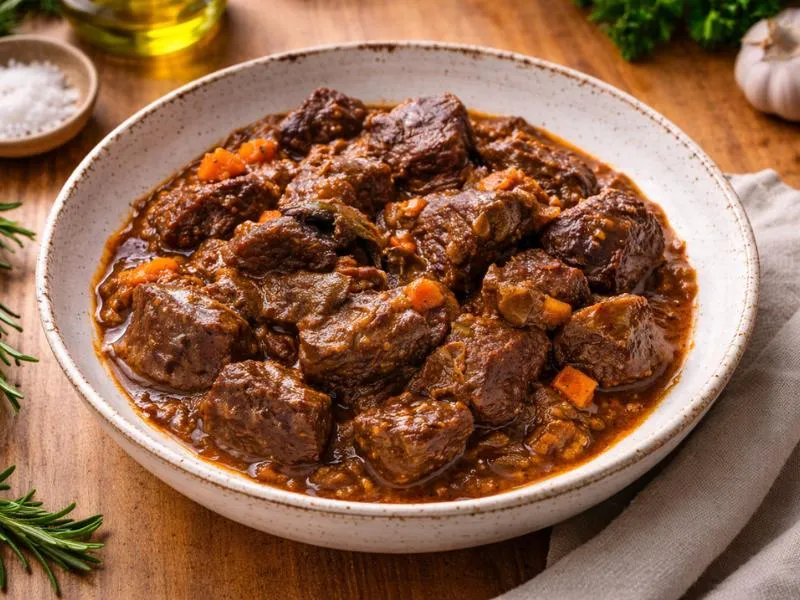
👉 View Authentic Recipe 👈
About This Dish
Spezzatino di Manzo (Italian beef stew) is a hearty, slow-braised comfort dish popular throughout Northern Italy, particularly in Lombardy and Emilia-Romagna. The name “spezzatino” comes from “spezzare” (to break), referring to the cubed beef that forms the foundation of this rustic preparation. Traditionally made with chuck roast, this stew combines aromatics like onions, carrots, and celery with mushrooms and a generous pour of red wine.
The dish emerged from peasant cooking traditions where tougher, more affordable cuts of beef were transformed through patient braising into tender, flavorful meals. Unlike French beef stews that often feature tomatoes prominently, classic Italian spezzatino focuses on the interplay between the beef’s natural richness and the depth that wine and aromatics provide during the long cooking process.
Spezzatino is traditionally served family-style during Sunday gatherings or cold-weather meals, ladled over creamy polenta, served alongside mashed potatoes, or accompanied by crusty bread to soak up the rich sauce. Regional variations exist—some cooks add potatoes directly to the pot, while others prefer to keep the stew meat-focused and serve starches separately. Fresh rosemary and bay leaf are the typical herbs, providing aromatic notes without overwhelming the beef’s natural flavor.
🧑🍳 Analyzed by CucinaBot
Why This Dish Works
The magic of spezzatino lies in the transformation of collagen-rich chuck roast through low-temperature braising. As the beef simmers at 300°F for 2.5-3 hours, tough connective tissues break down into gelatin, creating a silky, unctuous texture. The red wine contributes tannins and acidity that help tenderize the meat while adding complexity, and the mushrooms release glutamates that amplify the stew’s savory depth. The slow evaporation of liquid concentrates flavors and creates a sauce with body that clings to the beef.
Key Success Factors
- Patient Reduction: After adding wine, cook until it mostly evaporates and absorbs into the beef—this concentrates flavor and removes harsh alcohol notes
- Low and Slow: The 300°F oven temperature is crucial; higher heat toughens the meat rather than tenderizing it
- Lid Management: Keeping the lid tightly closed for the first 2 hours traps moisture, then removing or cracking it during the final 30-45 minutes allows the sauce to thicken and the meat to develop color
- Resting Time: After braising, let the stew sit for 10-15 minutes before serving to allow flavors to settle and the sauce to thicken naturally
Common Pitfalls
Many American interpretations add excessive tomato paste or diced tomatoes, creating a tomato-forward stew that resembles beef cacciatore rather than authentic spezzatino. Another frequent mistake is cutting the beef too small—pieces smaller than 1 inch will break apart during the long braise. Some recipes also include garlic, but traditional Northern Italian versions rely on the aromatic base of onion, carrot, and celery (soffritto) without garlic, allowing the beef and wine to shine as the dominant flavors.
How to Judge Authenticity
When reviewing recipes, look for these markers of authenticity:
- Uses chuck roast or stewing beef cut into 1-inch cubes
- Features red wine as a primary liquid component (not just a splash)
- Includes mushrooms and a classic soffritto base of onion, carrot, and celery
- Specifies low-temperature braising (around 300°F) for 2.5-3 hours minimum
- Contains minimal herbs—typically just rosemary and bay leaf, without oregano, basil, or heavy garlic