Zabaglione
Whipped egg custard dessert flavored with sweet wine, served warm or chilled.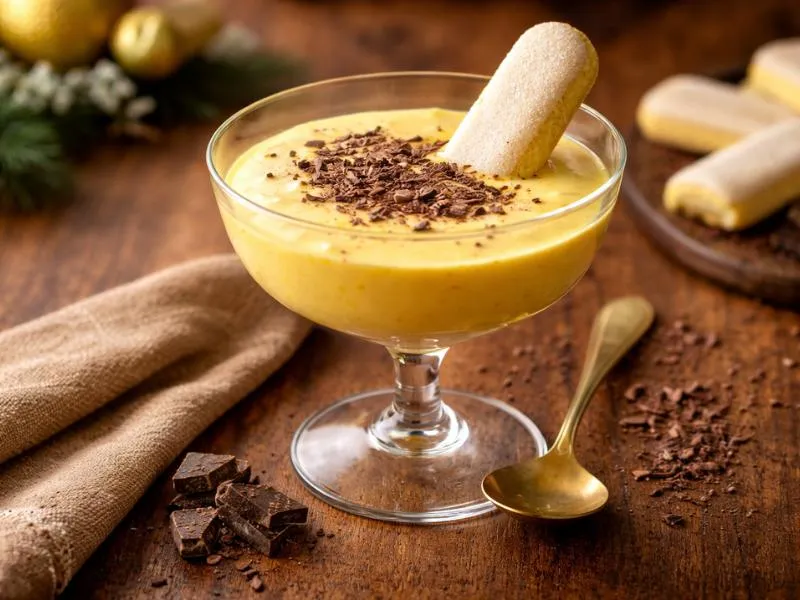
👉 View Authentic Recipe 👈
About This Dish
Zabaglione (also spelled zabaione or zabajone) is one of Italy’s most elegant yet simple desserts, originating from the Piedmont region in northwestern Italy.
This light, foamy custard consists of just three essential ingredients—egg yolks, sugar, and Marsala wine—whisked together over gentle heat until thick and airy. The name likely derives from the Piedmontese dialect word “zabajon,” though some trace its origins to Renaissance-era court cuisine.
Traditionally, zabaglione was considered a restorative food, sometimes even served for breakfast or to those recovering from illness, as the combination of eggs and fortified wine was believed to have strengthening properties.
Italian families have passed down their techniques through generations, with grandparents teaching the proper whisking motion and the crucial importance of constant movement to prevent the eggs from scrambling.
The dessert’s versatility allows it to be served warm immediately after preparation or chilled as a cold cream. While Marsala is the classic choice for flavoring, regional variations exist using other sweet wines, prosecco, or even liqueurs like limoncello or amaretto.
Zabaglione can be enjoyed on its own in small glasses, spooned over fresh berries, or used as a component in more complex desserts like tiramisu.
Our Recipe
This recipe honors the traditional Piedmontese method, emphasizing the importance of fresh eggs and proper technique. The key is maintaining steady whisking motion throughout the cooking process.
Ingredients
Serves 4 as a light dessert
- 5 large egg yolks (reserve whites for another use)
- 2½ ounces (70 grams) granulated white sugar
- 3 fluid ounces (90 milliliters) sweet Marsala wine
- Fresh berries or grated dark chocolate, for serving (optional)
Instructions
-
Set up your double boiler: Fill a medium saucepan with water until it reaches about three-quarters full. Place a heatproof bowl (glass, stainless steel, or copper) on top to test the fit—the bottom of the bowl should just touch the water surface. Remove the bowl and set the water to boil over medium-high heat.
-
Whisk the egg yolks: Place the egg yolks in the bowl and whisk vigorously by hand for about 5 minutes while waiting for the water to reach a boil. This initial whisking incorporates air and begins building the custard’s structure.
-
Add the sugar gradually: Sprinkle in the sugar a little at a time, whisking continuously after each addition. Continue whisking until all the sugar is incorporated and the mixture becomes pale yellow and creamy. This should take another 3-4 minutes of steady arm work.
-
Cook over the water bath: Once the water reaches a boil, reduce heat to maintain a gentle simmer. Place the bowl on top of the saucepan, ensuring the bottom sits just at the water level. Begin whisking immediately and do not stop.
-
Add the Marsala: Pour in half of the Marsala wine while continuing to whisk in smooth, consistent motions. Add the remaining Marsala after 1-2 minutes, maintaining constant whisking throughout.
-
Whisk to perfect consistency: Continue whisking vigorously for 5-8 minutes total over the heat. The mixture will gradually thicken, become foamy, and increase in volume. The custard is ready when it reaches a thick, cream-like consistency and the internal temperature reaches 180°F (82°C) on an instant-read thermometer. The mixture should fall from the whisk in thick ribbons.
-
Serve immediately or chill: For warm zabaglione, pour immediately into small serving glasses or cups. For chilled zabaglione, cover the surface directly with plastic wrap and refrigerate for at least 2 hours. Top with fresh berries or a light dusting of grated dark chocolate just before serving.
🧑🍳 Analyzed by CucinaBot
Why This Dish Works
The magic of zabaglione lies in controlled heat application and mechanical action. Whisking incorporates air bubbles into the egg yolks while the gentle steam heat from the water bath cooks the proteins just enough to thicken without coagulating into scrambled eggs.
The alcohol in Marsala wine contributes aromatic compounds and lowers the coagulation temperature slightly, allowing for a smoother texture. Sugar stabilizes the foam structure and adds sweetness that balances the wine’s complexity.
Key Success Factors
- Never Stop Whisking: Constant motion is non-negotiable—stopping even briefly allows hot spots that will scramble the eggs
- Temperature Control: The water should simmer, not boil violently, maintaining gentle heat that cooks gradually
- Fresh Egg Quality: Farm-fresh organic eggs create superior flavor and texture compared to standard supermarket eggs
- Proper Temperature Endpoint: Reaching 180°F (82°C) ensures food safety while achieving the ideal thick consistency
- Arm Strength Commitment: This is a workout—expect 8-10 minutes of continuous whisking for proper results
Common Pitfalls
Many modern recipes add unnecessary ingredients like cream, butter, or vanilla that mask rather than enhance the pure egg-and-wine flavor. Some instructions suggest using electric mixers, but traditional hand whisking provides better control over heat distribution and texture development.
The most critical error is insufficient whisking or removing the mixture from heat too early, resulting in a thin, runny consistency that separates upon standing. Zabaglione should hold its body when properly prepared.
How to Judge Authenticity
When reviewing recipes, look for these markers of authenticity:
- Only three core ingredients (egg yolks, sugar, sweet wine) with no cream or thickeners
- Marsala specified as the traditional wine choice, though regional variations noted
- Double boiler or bain-marie method explicitly described
- Emphasis on continuous whisking throughout the entire cooking process
- Temperature guidance around 180°F (82°C) or description of thick ribbon consistency