Paccheri con Ragù Napoletano
Large tube pasta with slow-cooked meat ragù in rich tomato sauce from Naples.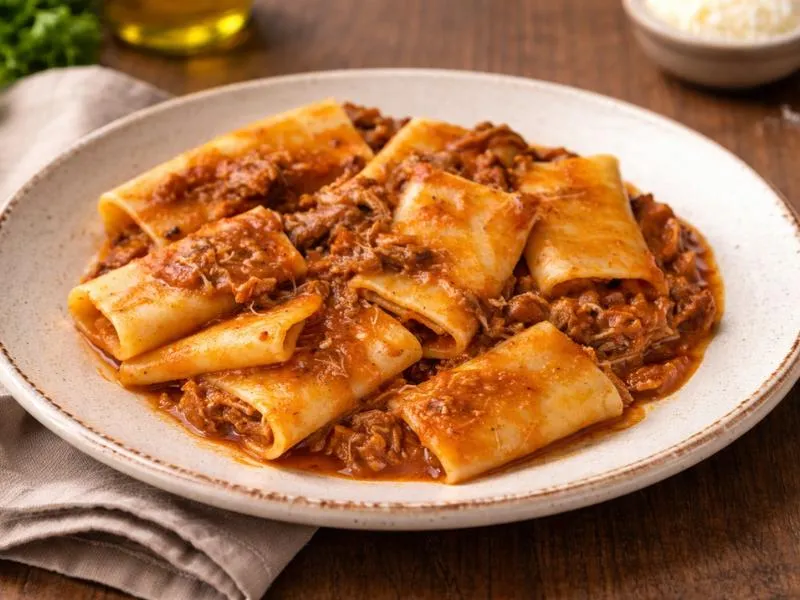
👉 View Authentic Recipe 👈
About This Dish
Paccheri con Ragù Napoletano (Paccheri Pasta with Neapolitan Ragù) represents the Sunday cooking tradition of Naples and the wider Campania region. The name “paccheri” comes from the Neapolitan dialect word for “slap,” referring to the sound these oversized pasta tubes make when they hit the plate. These smooth, wide cylinders measure about 2 inches long and are specifically designed to capture generous amounts of the rich, meaty sauce.
Neapolitan ragù differs fundamentally from its northern cousin, Bolognese ragù. While Bologna’s version uses ground meat with minimal tomato, Naples celebrates whole cuts of beef, pork ribs, and sausages slowly braised in abundant tomato sauce for three to four hours.
The sauce was traditionally prepared on Sunday mornings, filling homes with its aroma throughout the day. In classic Neapolitan households, the meat would be served as a separate second course while the sauce dressed the pasta, though modern preparations often incorporate the shredded meat directly into the sauce.
The dish embodies the Neapolitan philosophy of cucina povera—extracting maximum flavor from simple ingredients through patient cooking. The long simmering transforms inexpensive cuts into tender, succulent meat while the sauce develops deep, complex flavors. Fresh basil, red wine, and a cheese rind contribute aromatic depth that distinguishes this preparation from other Italian meat sauces.
Our Recipe
This recipe honors the traditional Neapolitan method while making it accessible for home cooks. The key is maintaining a gentle simmer and resisting the urge to rush the process.
Ingredients
Serves 6-8
For the Ragù:
- 3 tablespoons extra-virgin olive oil
- 1¼ pounds beef chuck roast, cut into 2-inch pieces
- 4 pork spare ribs (about 1 pound)
- 2 sweet Italian sausages (about 8 ounces)
- 1 medium onion, finely diced
- 1 large carrot, finely diced
- 2 celery stalks, finely diced
- 4 garlic cloves, minced
- 1½ cups dry red wine (preferably Chianti)
- 2 pounds whole San Marzano tomatoes with juices, crushed by hand
- 1 cup beef or chicken stock
- 1 large bunch fresh basil (about 15-20 leaves)
- 5-6 fresh sage leaves
- 1 Parmigiano-Reggiano rind (about 2x3 inches)
- 1 teaspoon sugar
- Salt and freshly ground black pepper to taste
For the Pasta:
- 1½ pounds paccheri pasta
- Freshly grated Parmigiano-Reggiano cheese, for serving
Instructions
-
Brown the meats: Heat olive oil in a large Dutch oven or heavy-bottomed pot over medium-high heat. Working in batches to avoid crowding, brown the beef chunks, pork ribs, and sausages on all sides until deeply caramelized, about 3-4 minutes per side. Transfer browned meats to a plate and set aside.
-
Build the aromatic base: Reduce heat to medium and add the onion, carrot, and celery to the same pot. Cook, stirring occasionally, until vegetables soften and begin to color, about 8-10 minutes. Add garlic and cook until fragrant, about 1 minute.
-
Deglaze and combine: Pour in the red wine, scraping up any browned bits from the bottom of the pot. Let the wine simmer vigorously for 2-3 minutes to reduce slightly. Add the crushed tomatoes, stock, basil bunch (kept whole), sage leaves, cheese rind, sugar, and a generous pinch of salt and pepper. Stir to combine.
-
Slow braise the meat: Return all browned meats to the pot, nestling them into the sauce. Bring to a gentle simmer, then reduce heat to very low. Cover partially and cook for 3 hours, stirring every 30-40 minutes. The sauce should barely bubble—patience is essential here.
-
Remove and shred the meat: Transfer all meat pieces to a cutting board. Remove and discard the basil stems, sage leaves, and cheese rind from the sauce. Using two forks, shred the beef and pull the meat from the pork ribs, discarding bones and excess fat. Roughly mash the sausages. Return all meat to the pot.
-
Reduce and thicken: Increase heat to medium and simmer the sauce uncovered for 20-30 minutes, stirring frequently, until it becomes thick and glossy. The sauce should coat a spoon heavily. Taste and adjust seasoning with salt and pepper.
-
Cook the pasta: Bring a large pot of heavily salted water to a rolling boil. Add paccheri and cook 1 minute less than package directions for al dente texture. Reserve 2 cups pasta cooking water before draining.
-
Marry pasta and sauce: Return drained paccheri to the pot. Add 6-8 generous ladles of ragù and ½ cup pasta water. Toss gently over medium heat for 1-2 minutes, adding more pasta water as needed to create a silky coating. Serve immediately with abundant Parmigiano-Reggiano and black pepper.
🧑🍳 Analyzed by CucinaBot
Why This Dish Works
The extended braising time breaks down collagen in the meat into gelatin, creating body and richness in the sauce. Browning the meat first triggers the Maillard reaction, developing deep savory notes that permeate the entire dish.
The large surface area of paccheri tubes maximizes contact with the sauce, while their hollow interiors capture pools of ragù in every bite.
Red wine contributes tannins that balance the sweetness of tomatoes, while the cheese rind adds concentrated umami that amplifies the meat’s savoriness.
Key Success Factors
- Proper Browning: Don’t skip searing the meat in batches—crowding causes steaming instead of caramelization
- Low and Slow: The sauce must barely simmer throughout the 3-hour cook; high heat will toughen the meat
- Pasta Water Magic: Reserve generous amounts of starchy pasta water to emulsify the final sauce
- Resting the Ragù: This sauce improves overnight as flavors meld—consider making it a day ahead
Common Pitfalls
Many recipes incorrectly add ground meat instead of whole cuts, which produces a fundamentally different texture and flavor profile. Some versions include ricotta cheese or mozzarella, which have no place in authentic Neapolitan ragù.
Another frequent error is cooking the sauce at too high a temperature, which causes the meat to dry out and the tomatoes to taste harsh rather than sweet and concentrated.
How to Judge Authenticity
When reviewing recipes, look for these markers of authenticity:
- Uses whole cuts of beef and pork (never ground meat)
- Includes pork ribs and Italian sausages alongside beef
- Specifies 3+ hours of gentle simmering time
- Features abundant fresh basil and a cheese rind
- Contains generous amounts of tomato (distinguishing it from Bolognese ragù)