Pasta alla Gricia
Rigatoni tossed with crispy guanciale, sharp Pecorino Romano, and black pepper.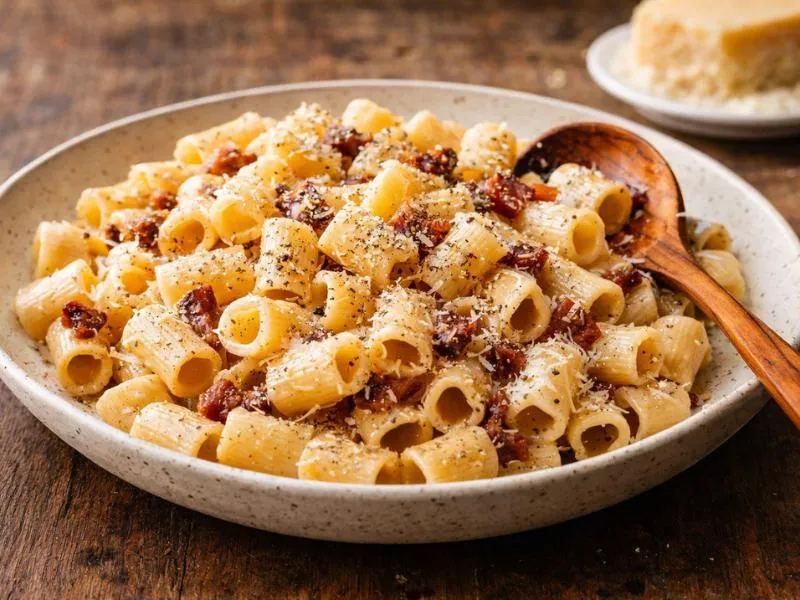
👉 View Authentic Recipe 👈
About This Dish
Pasta alla Gricia is one of Rome’s four iconic pasta dishes, alongside Carbonara, Amatriciana, and Cacio e Pepe. Often called the “white Amatriciana” because it contains the same ingredients as Amatriciana minus the tomatoes, this deceptively simple dish showcases the pure flavors of guanciale (cured pork jowl), Pecorino Romano cheese, and black pepper.
The dish likely originated in the town of Amatrice before becoming a Roman staple, with its name possibly deriving from a gricio (a bread seller) or the village of Grisciano near Amatrice.
The beauty of Gricia lies in its minimalism—just four ingredients create a rich, savory sauce through the emulsification of rendered pork fat, starchy pasta water, and grated cheese. Traditional preparations use rigatoni or tonnarelli, short or long pasta shapes with enough surface area to hold the creamy, peppery sauce.
Unlike Carbonara which uses eggs, Gricia relies entirely on the pasta cooking water to create its signature creamy consistency. This makes it both simpler and more temperamental—the sauce must be built carefully off-heat to prevent the cheese from clumping into grainy lumps.
🧑🍳 Analyzed by CucinaBot
Why This Dish Works
The magic happens when rendered guanciale fat emulsifies with starchy pasta water and finely grated Pecorino Romano. The fat molecules disperse evenly throughout the water, creating a creamy coating that clings to every surface of the pasta. Black pepper provides aromatic compounds that cut through the richness while the salty, tangy Pecorino adds umami depth. The crispy guanciale pieces provide textural contrast against the silky sauce.
Key Success Factors
- Guanciale Quality: Use authentic guanciale, not pancetta or bacon—the unique fat-to-meat ratio and curing process are essential
- Pasta Water Starch: Reserve plenty of very starchy pasta water (the cloudier, the better) to build the emulsion
- Temperature Control: Add cheese off-heat or on very low heat to prevent it from seizing into clumps
- Constant Tossing: Vigorously toss the pasta while adding cheese and water to create a smooth, cohesive sauce
Common Pitfalls
Many recipes substitute pancetta or bacon for guanciale, fundamentally changing the dish’s flavor profile and fat content. Another common mistake is adding cream, which is never used in authentic Roman pasta dishes. Cooks also frequently add the cheese while the pan is too hot, resulting in a grainy, separated sauce instead of a silky emulsion. Finally, under-seasoning with black pepper robs the dish of its characteristic peppery bite.
How to Judge Authenticity
When reviewing recipes, look for these markers of authenticity:
- Specifies guanciale specifically (not pancetta, bacon, or generic “pork”)
- Contains no cream, butter, or other dairy besides Pecorino Romano
- Emphasizes building the sauce off-heat with reserved pasta water
- Uses generous amounts of freshly cracked black pepper
- Recommends pasta shapes like rigatoni, tonnarelli, or spaghetti